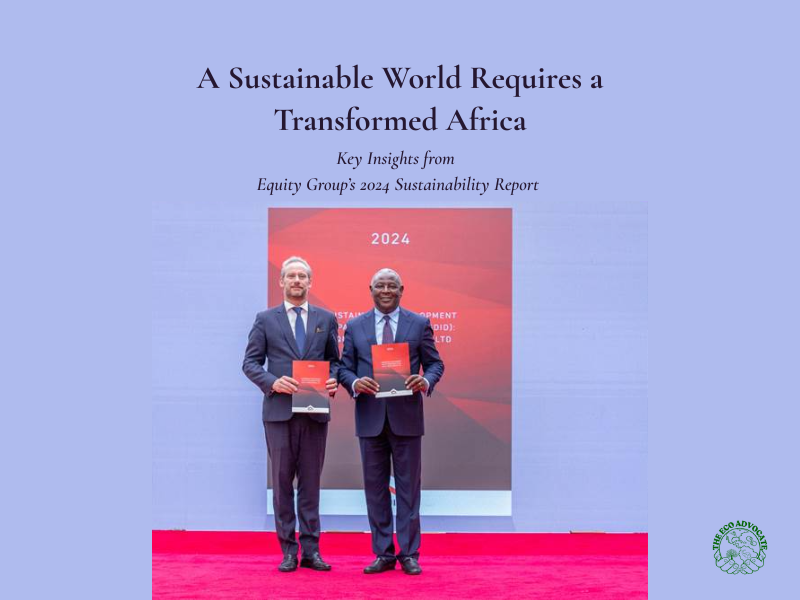
When we talk about sustainability in Africa, the conversation often centres on governments, NGOs, and international organisations. However, it’s becoming increasingly clear that the private sector plays a crucial role in shaping the continent’s future as well.
The recent 2024 Sustainability Report from Equity Group, titled “A Sustainable World is a Transformed Africa,” highlights this vital contribution. It illustrates how businesses can make a tangible difference in various areas, including environmental conservation, social responsibility, and economic growth.
The report offers insights and examples of how companies can act as change agents, driving initiatives that not only benefit their bottom lines but also create a positive impact on communities and ecosystems. By embracing sustainable practices, companies can help transform Africa into a thriving continent where both people and the planet can prosper.
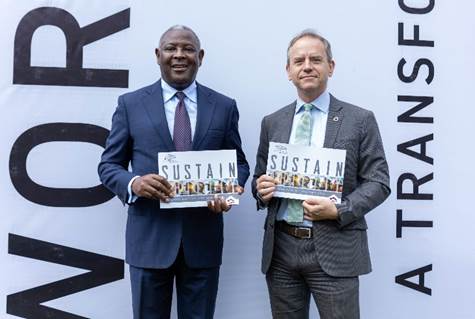
From left to right: Equity Group Managing Director and CEO, Dr. James Mwangi and UN Resident Coordinator in Kenya, Dr. Stephen Jackson, during the unveiling of the Equity Group’s 2024 Sustainability Report themed “A Sustainable World is a Transformed Africa.” The report showcases the Group’s deepened commitment to sustainability through its Tri-Engine Model, Social, Economic, and Environmental, which has scaled efforts in climate finance, socio-economic resilience, and nature-based risk management. A key highlight of the event was the launch of Equity Bank Kenya’s inaugural Sustainable Development Impact Disclosure (SDID) Report, which aligns finance with the Sustainable Development Goals and reinforces Equity’s leadership in transparent, impact-based finance.
Why This Matters for Kenya and Africa
Kenya and the broader African continent are grappling with a range of intricate challenges that impact everyday life. These include climate change, the decline of biodiversity, financial exclusion, a high rate of youth unemployment and fragile food systems.
To address these issues effectively, Equity has developed the Tri-Engine Model, which emphasises the interconnectedness of social, economic, and environmental factors. This approach defines how Equity conducts its business; not merely treating sustainability as an act of charity but integrating it deeply into all aspects of its operations, from lending practices to investment strategies, partnerships and community initiatives.
The importance of this approach cannot be overstated. Africa must move beyond a reliance on external aid; sustainable change should stem from homegrown solutions. This means creating pathways to resilience, dignity and opportunity for communities that are often overlooked. By placing these principles at the heart of its strategy, Equity is not only addressing pressing challenges but also empowering individuals and communities to build a brighter future for themselves.
Social Protection and Inclusion
One of the standout features of this report is the significant growth in social protection initiatives by Equity, especially aimed at supporting refugees, local communities and marginalised households. In 2024, the organisation successfully facilitated cash transfers totalling KSh 25.8 billion and provided affordable credit amounting to KSh 4 billion. This effort has had a tangible impact, directly benefiting over 447,000 vulnerable households.
These initiatives are more than just temporary financial aid; they focus on fostering financial literacy and self-reliance, while also building the capacity for long-term resilience. In a country like Kenya, which faces the challenges of persistent drought and displacement, these programs demonstrate how financial support can be a means of empowerment, helping individuals and communities thrive instead of being sidelined. This approach not only addresses immediate needs but also sets the foundation for sustainable growth and stability in the future.
Climate and Nature Stewardship
Equity stands out as one of the pioneering financial institutions in Africa to embrace the Task Force on Nature-related Financial Disclosures (TNFD) framework. This forward-thinking approach ensures that biodiversity and ecosystem risks are integrated into their business strategies upfront, rather than being considered only after decisions are made.
Additionally, Equity has embarked on an impressive tree-growing initiative, having planted a total of 35 million trees. This effort aligns with Kenya’s ambitious goal of planting 15 billion trees by the year 2032, playing a crucial role in combating climate change and restoring our natural environment.
Beyond reforestation, Equity is also focused on sustainable development by providing financing for solar energy, water solutions, and climate-smart agricultural practices. This not only helps the bank minimise its environmental impact but also supports farmers, small businesses, and families in adapting to the challenges posed by climate change. By taking these steps, Equity is demonstrating a commitment to a greener future and helping communities thrive in the face of climate adversity.
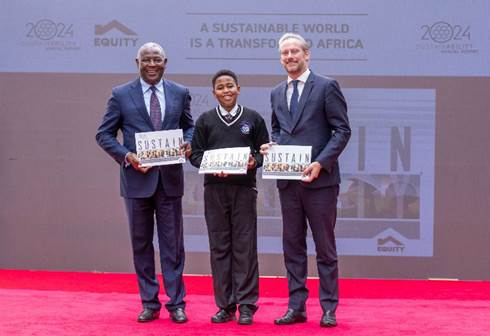
From left to right: Equity Group Managing Director and CEO, Dr. James Mwangi, Baraka Moruri, the Little Mr. Environment Kenya 2023 and French Ambassador to Kenya, H.E. Arnaud Suquet, during the unveiling of the Equity Group’s 2024 Sustainability Report themed “A Sustainable World is a Transformed Africa.” The report showcases the Group’s deepened commitment to sustainability through its Tri-Engine Model, Social, Economic, and Environmental, which has scaled efforts in climate finance, socio-economic resilience, and nature-based risk management. A key highlight of the event was the launch of Equity Bank Kenya’s inaugural Sustainable Development Impact Disclosure (SDID) Report, which aligns finance with the Sustainable Development Goals and reinforces Equity’s leadership in transparent, impact-based finance.
Education, Health and Food Security
Equity has made a significant impact on social infrastructure in several key areas:
- Education: The Elimu Scholarship Program has changed the lives of over 38,000 students, boasting an impressive 95% completion rate. Additionally, the Equity Leaders Program has opened doors for 130 scholars, helping them secure placements at renowned global universities, including prestigious Ivy League institutions. This investment in education is equipping the next generation with the tools they need to succeed.
- Healthcare: Through its initiative, Equity Afya, the Group has expanded access to healthcare by establishing 127 medical centres across Kenya and 5 in the Democratic Republic of Congo. These centres have provided essential medical services to over 3.3 million patients, particularly in rural and underserved communities. This expansion is crucial in ensuring that all individuals have access to the healthcare they need.
- Agriculture: Equity has also stepped up to support the agricultural sector by providing training in sustainable farming practices to nearly 246,000 farmers. Furthermore, 183,000 farmers have been connected to markets, helping them improve their livelihoods and minimise post-harvest losses. This focus on agriculture not only boosts individual farmers but also strengthens the local economy.
Overall, these investments reflect a profound understanding that sustainability goes beyond simply protecting the environment. It’s about empowering people, enhancing their potential, and working to maintain a balance between human progress and the health of our natural world.
Driving Accountability in Finance
One of the most significant advancements lately is the introduction of the Sustainable Development Impact Disclosure (SDID) Report, developed in collaboration with J.P. Morgan. This innovative framework aims to clearly measure how financial activities align with the United Nations Sustainable Development Goals (SDGs). By focusing on data rather than vague promises, it allows us to hold organisations accountable for their financial contributions to sustainability.
This transparency is especially crucial for Africa, where issues like greenwashing and short-term commitments can erode trust in sustainability initiatives. The SDID Report provides a tool to assess whether investments are genuinely resulting in positive, measurable changes in communities and the environment. In essence, it empowers stakeholders to demand more from their financial partners, ensuring that sustainability efforts deliver real benefits rather than just good intentions.
The Bigger Picture: Africa Taking the Lead, Not Following
During the recent report launch, both Kenyan and international leaders made a powerful point: Africa should not be viewed as a “passive victim” of decisions made elsewhere in the world. Instead, the continent is emerging as a proactive force capable of driving meaningful change.
Take Equity, for example. This institution has shown that real progress is possible, with impressive initiatives that others can look to for inspiration. One notable achievement is the reduction of waste by 18%, dropping from 441 tons in 2023 to 362 tons in 2024. This kind of waste management isn’t just about numbers; it reflects a growing commitment to sustainability and responsible resource usage.
Additionally, Equity is embedding Environmental, Social and Governance (ESG) risks into its credit systems, which is a critical step toward promoting responsible business practices across the continent. Furthermore, their distribution of over 44,000 clean energy products underscores a broader commitment to renewable energy solutions that can be replicated by other businesses.
These accomplishments not only highlight Equity’s leadership but also serve as a roadmap for other African enterprises aiming to innovate and contribute positively to both the economy and the environment. Africa’s journey is one of empowerment, showcasing that the continent can lead in sectors where it was once seen as merely a participant.
What We Can Learn
For readers of Eco Advocate, here are some important insights to keep in mind:
- Sustainability is a Journey: It’s not just a single initiative or project; instead, it should be a comprehensive, ongoing approach that weaves together environmental concerns, social equity and economic viability. All three elements need to work harmoniously to create a sustainable future.
- The Role of Finance: The flow of money plays a crucial role in determining a community’s resilience. When financial resources are managed wisely, they can help communities thrive and adapt to challenges. Conversely, mishandled finances can exacerbate vulnerability. Understanding this dynamic is essential for fostering sustainable development.
- Africa’s Unique Position: Africa has the potential to be a frontrunner in sustainability by tailoring solutions to its unique contexts and challenges. By doing so, not only can African nations enhance their own sustainability practices, but they can also shape global conversations about sustainability, rather than merely reacting to outside influences.
By focusing on these principles, we can work toward a more sustainable and equitable future for all.
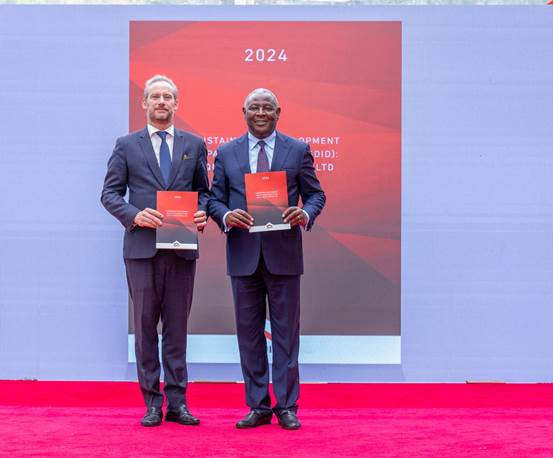
From left to right: French Ambassador to Kenya, H.E. Arnaud Suquet, and Equity Group Managing Director and CEO, Dr. James Mwangi, during the launch of Equity Bank Kenya’s inaugural Sustainable Development Impact Disclosure (SDID) Report. Unveiled as part of the Group’s 2024 Sustainability Report themed “A Sustainable World is a Transformed Africa,” the SDID Report aligns finance with the Sustainable Development Goals and reinforces Equity’s leadership in transparent, impact-based finance. The Sustainability Report also highlights the Group’s Tri-Engine Model, Social, Economic, and Environmental, which anchors its strategy in climate finance, socio-economic resilience, and nature-based risk management.
Conclusion
Equity Group’s 2024 Sustainability Report highlights a powerful message: African institutions have the potential to create real change that balances scale, impact and accountability. The report showcases a variety of initiatives that range from planting trees and leveraging technology to supporting refugees and farmers, as well as improving education and healthcare.
This comprehensive approach illustrates how businesses can play a significant role in promoting both ecological sustainability and social equity. As Kenya commits to tackling climate change and Africa seeks to solidify its role in the global sustainability conversation, one vital lesson emerges: for a sustainable future to take root, Africa must transform.
This transformation not only benefits the continent but also contributes globally, emphasising that progress in Africa is essential for a more sustainable world.