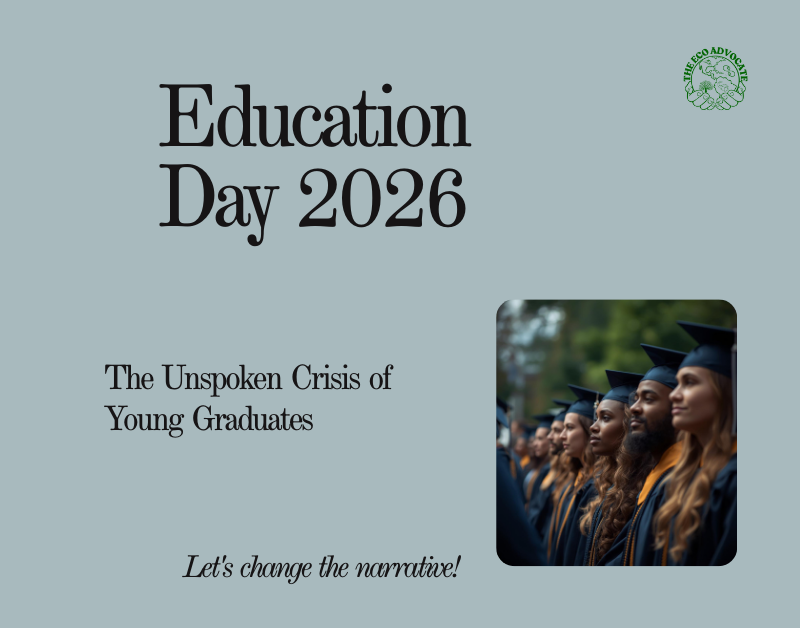
Every year on International Education Day, social media is flooded with joyful images of graduates donning caps and gowns. Inspirational quotes fill our timelines, and hashtags proclaiming empowerment trend as we celebrate the achievements education brings. But beneath this veneer of success lies a more sobering truth that we desperately need to address.
In many parts of the world, and particularly in Kenya, countless young people face a harsh reality. They are educated, qualified, and yet find themselves unemployed or trapped in jobs that fail to respect their worth, eroding their dignity and mental health in the process.
If education is indeed a right, then so too should be the right to a meaningful future.
The Disheartening Reality: Education Isn’t a Guaranteed Job
In Kenya today, youth represent nearly 80% of the unemployed population. Each year, over a million young individuals graduate from various educational institutions, eager for the chance to contribute to society and earn a living. Yet, most of them struggle to find suitable employment.
This situation is not due to a lack of effort or ambition. Instead, it highlights a fundamental flaw in our system.
Employers across the globe consistently express difficulties in finding candidates with the right skill sets, even though millions of graduates remain unemployed. In Kenya, many companies report that they cannot fill open positions because applicants lack the practical, job-ready skills needed. Meanwhile, graduates voice frustration over not having been prepared for the realities of the job market.
This is not a failing of the youth but rather a failure to align educational outcomes with workforce needs.
Bridging the Skills Gap: A Critical Misalignment
The core issue is not a lack of intelligence among young graduates; it’s that they have been trained for roles that no longer exist or that have evolved significantly.
Many Kenyan graduates enter the job market having never experienced the following:
- Crafting a professional CV
- Utilising industry-standard software
- Managing projects
- Engaging in real-world workplace environments
- Understanding the fundamentals of finance, contracts, or business operations
Yet, they are expected to compete in a landscape that increasingly prioritises digital literacy, effective communication, teamwork and adaptability.
This disjointed reality leads to a painful contradiction. A pool of educated, unemployed graduates next to a multitude of unfilled job opportunities. The education system focused on preparing individuals for exams rather than equipping them for life and work.
The Importance of Early Career Guidance
One of the contributing factors to this crisis is the lack of effective career guidance that should start early in a student’s educational journey. Many students in Kenya choose their subjects, degrees and potential careers with minimal practical information.
Often, they are advised to “become a lawyer” or “study medicine.” Yet, the vital questions of which jobs are available, which industries are thriving, which skills are in demand, and what various career paths entail remain largely unanswered.
This lack of guidance leads many young people to drift into fields that do not align with the realities of the job market. By the time they realise their qualifications do not lead to financial stability, it’s often too late. Proper career educationis essential for survival.
In countries where career education begins early, students have the chance to explore different professions, gain insights into the functioning of the job market, and make informed decisions. In Kenya, however, students frequently navigate their paths blindfolded, only to face blame for their missteps.
Understanding the Mental Health Impact of Unemployment
Unemployment transcends economic consequences. It deeply affects mental health as well. Studies have shown that unemployed young people are significantly more likely to experience:
- Depression
- Anxiety
- Low self-esteem
- Substance abuse issues
- Suicidal thoughts
In Kenya, the pressures are overwhelming. Families make sacrifices to invest in their children’s education, society equates self-worth with income, and there is often a cultural stigma attached to poverty. When graduates struggle to find work, they internalise this as personal failure, covering the larger systemic issues at play.
For those fortunate enough to secure jobs, the experience can be no better. Many enter work environments characterised by:
- Poor pay
- Unsafe conditions
- Abusive management
- Long hours without contracts
- Lack of job security
In these instances, profit often takes precedence over the well-being of employees, fostering a culture of fear and exhaustion among young workers who are told to be grateful just to have a job.
The Reality of the Informal Economy
Alarmingly, over 80% of Kenyan workers find themselves in the informal sector, which offers:
- No job security
- Absence of sick leave
- Lack of pensions
- Minimal legal protection
- Inconsistent minimum wage enforcement
Young people are particularly vulnerable in this context, working unstable jobs in sectors like construction, lower-level hospitality jobs, and small-scale businesses that often operate outside of legal protections. They face precarious employment situations, hired today, let go tomorrow.
An Environmental Perspective on the Crisis
As we think critically about these issues, it’s crucial to recognise the environmental dimensions of this crisis as well. Desperation among youth can lead to environmentally harmful behaviours:
- Deforestation for immediate survival needs
- Illegal mining practices
- Exploitation of land resources
- Abandonment of conservation efforts
It’s a complex interplay that threatens both our workforce and our planet.
The Path Forward
As we commemorate Education Day 2026, let us celebrate the achievements of education while also acknowledging the urgent need for systemic change. We must advocate for an education system that empowers young people with the skills and knowledge they truly need, coupled with robust career guidance that aligns with the realities of the job market. Only then can we ensure that education leads to meaningful opportunities and a sustainable future for all.