
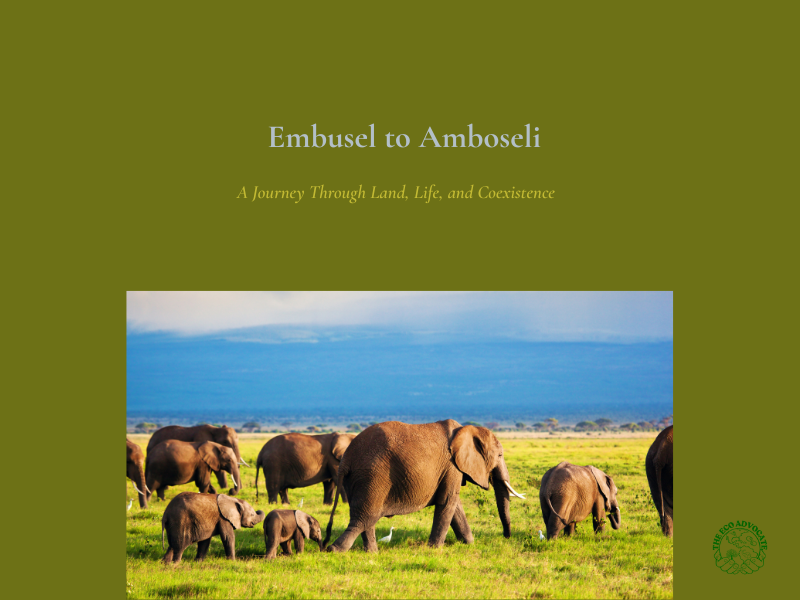
The names we give to places carry deep meaning, weaving together memories, identities, and the essence of the landscapes they represent. Take “Amboseli,” for example, one of Kenya’s most iconic wildlife areas. The name originates from the Maa word “Embusel,” meaning “fine salty dust.” To the Maasai people, this isn’t just a poetic phrase; it symbolises their profound connection to the land where people, livestock, and wildlife historically gather around mineral-rich grounds. Each finds sustenance in the shimmering dust of the plains, creating a vibrant tapestry of life.
Understanding Amboseli goes beyond just marvelling at its majestic elephants or picturesque wetlands. It’s about appreciating how its name reflects a long history of coexistence, shaped by respect, necessity, and the shared struggle for survival.
A Landscape of Dust and Life
Amboseli lies under the imposing shadow of Mount Kilimanjaro, where volcanic soil and alkaline dust mix with waters from melting glaciers. During dry seasons, the landscape takes on a pale hue, and fine white dust rises with every movement, like an artist’s brush across a canvas. Despite this seemingly harsh environment, life not only survives but thrives.
For the Maasai, this dust is a blessing. Their cattle lick it for its salt, vital for their health, and the community understands its ecological importance. Thus, “Embusel” embodies not just “dust,” but sustenance, connection, and a hidden abundance within this stark but beautiful landscape. It tells a story of harmony between land, livestock, and wildlife, reminding us that these elements do not compete but coexist in a delicate, balanced dance.
The Tradition of Naming
The Maasai take the naming of places very seriously. For them, every name is an act of stewardship, a way to honour what a place offers and requires. Naming Embusel acknowledged the land’s unique characteristics: its saltiness, openness, and life-giving dust.
Long before this area was designated a conservation zone by colonial authorities, Maasai herders moved through the landscape alongside elephants and zebras, observing unwritten rules of respect. They would share watering holes and ensure a safe distance for young elephants and their calves. Today, Maasai elders can identify individual elephants through memory, understanding their temperaments and the safest paths to navigate in dry times. This intricate ecological knowledge, honed over centuries, offers a rich understanding of the land that science alone cannot capture.
The Shift from Embusel to Amboseli
The transition from “Embusel” to “Amboseli” signifies more than just a spelling change; it marks a profound shift in relationships. In the early 1900s, colonial authorities established Amboseli as a game reserve and subsequently a national park. This was meant to protect wildlife, but it also excluded the Maasai, the land’s original stewards.
While the name survived, its meaning shifted. Amboseli became a sought-after destination for tourists and scientists, but distanced itself from the Maasai, who found their access to grazing lands and the vital mineral dust had been reduced. This historical rupture is significant, highlighting how conservation efforts, when implemented without local collaboration, can distort language and legacy. Once a symbol of mutual survival, Embusel turned into a barrier, framing humans and wildlife as adversaries rather than interconnected beings.
Rediscovering Shared Ground
Despite the challenges, the land remembers. Amboseli is one of the few places in Kenya where elephants and humans coexist with relatively little conflict. Nearby villages still recognise the elephants grazing close to their homes. These stories reflect a cultural memory of coexistence that endures through political and social upheavals.
Amboseli’s elephants are among the most studied in the world, serving as the basis for decades of research and conservation efforts. Yet beyond scientific labels lies a deeply human story: the people here see wildlife as kin. One mother herder poignantly expressed to researchers that when an elephant calf dies, “it is like losing one of our own.” This sentiment highlights the intertwined fates of wildlife and the people who share their environment.
From Embusel to a Global Perspective
Globally, Amboseli often graces the pages of glossy magazines and wildlife documentaries, showcasing elephants against the stunning backdrop of Kilimanjaro. However, the deeper narrative, rooted in Embusel, reminds us of the essential bond between the land and its people. By understanding the local significance of Amboseli, we can work towards a future where both wildlife and the Maasai thrive together, honouring the old stories while writing new ones of coexistence and respect.




A lovely story, beautifully written with an important message for conservationists.
Thank you