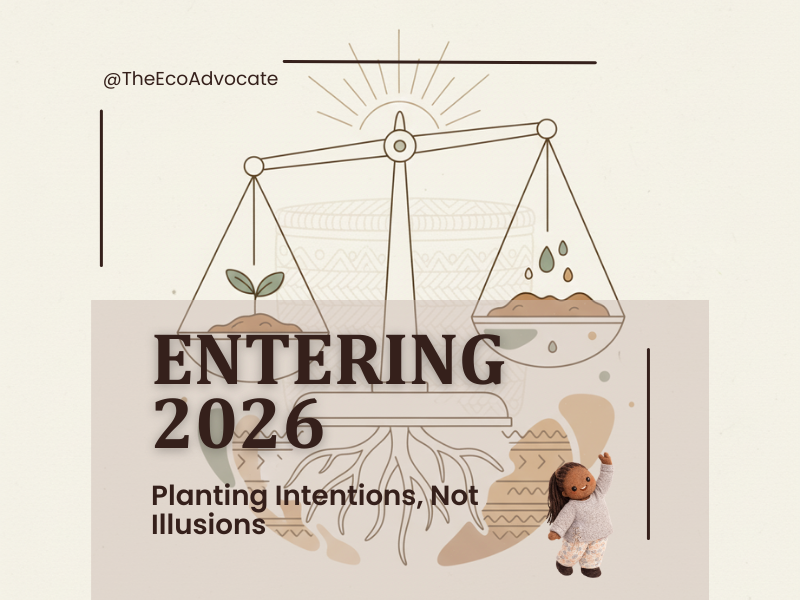
As the calendar flips to January 2026, we find ourselves immersed in the annual ritual of declaring fresh starts. However, before rushing into resolutions, it’s essential to pause and reflect honestly on the past year.
2025 was a pivotal time across Kenya and much of Africa, where climate change transitioned from an abstract concept to a stark reality in everyday life. Families were uprooted by floods, prolonged droughts strained agricultural livelihoods, food prices surged, and ecosystems were pushed to their breaking points. These challenges, unfortunately, were not stomached equally; those with the fewest resources often got the brunt of these impacts. Yet among these struggles, 2025 also showcased an inspiring and growing refusal to accept environmental harm and social injustice as a given.
This reflection isn’t an exercise in symbolic optimism or a list of late resolutions. It’s about setting clear intentions; deciding what we will prioritise, protect, and act upon now that 2026 has begun.
Justice: Who Bears the Cost?
At the heart of the climate crisis lies a critical question of justice. In Kenya, communities contributing little to global emissions often face the harshest consequences. Informal settlements are the first to flood, pastoralists struggle with diminishing grazing lands, and coastal communities see their livelihoods erode as shorelines recede. These scenarios are not mere coincidences; they stem from conscious choices about whose lives and labour hold value in our decision-making processes.
Environmental justice is about practicality rather than philosophy. It involves ensuring that all voices are included in climate-related discussions, recognising diverse knowledge systems, and guaranteeing that those most affected receive necessary protection when systems falter. We must push for policies that extend beyond national commitments, transforming into concrete safety, dignity, and opportunity at the community level. Without this shift, climate action risks becoming an elite initiative, detached from the realities faced by everyday people.
Balance: Rethinking Development and Nature
Balance is a term often associated with a gentle touch, yet achieving it necessitates making tough choices. It compels us to reckon with the extractive nature of many current development pathways. Forests are cleared under the guise of growth, rivers serve as waste disposal sites, and wildlife is conserved solely for its economic value. Such imbalances are neither sustainable nor equitable.
In many parts of Africa, Indigenous and local knowledge systems have long emphasised the interconnectedness of land, water, people, and wildlife. Ignoring this wisdom has cost us dearly, leading to degraded ecosystems and increased vulnerability for countless communities. Restoring this balance doesn’t imply rejecting development; rather, it calls for a redefinition of what development entails. Progress that undermines its own foundations is not true advancement; it is merely postponing the inevitable reckoning.
Life: What We Are Ultimately Defending
At its essence, environmental advocacy centres around life itself. Clean air, safe drinking water, fertile soils, and stable climates are not luxuries but the very conditions necessary for human dignity. Conversations about biodiversity, climate adaptation, and finance gained significant momentum throughout 2025. These discussions are vital, but they must extend beyond conference rooms and into the practical aspects of energy, food production, urban planning, and waste management.
The protection of life also demands that we confront uncomfortable truths about consumption patterns, inequalities, and accountability, both nationally and globally. No entity, community, or individual can claim immunity from this collective responsibility.
A Collective Path Forward
One persistent myth is that change is driven by a handful of heroic figures. The truth is, progress stems from organised communities, informed citizens, diligent researchers, and institutions that uphold accountability; individuals who refuse to succumb to apathy. Movements are sustained through participation, not through the pursuit of perfection.
Looking Ahead to 2026: From Intention to Action
As we step into 2026, we must acknowledge that it will not come with easy solutions. The climate crisis remains complex, political, and deeply rooted in inequality. Waiting for ideal conditions or flawless resolutions is no longer an option. What is crucial now is our direction, resolve, and the collective pressure we bring to bear.
If we truly commit to principles of justice, balance, and life, then 2026 must be the year we translate our agreements into action. We must demand climate responses that prioritise the most vulnerable. We need to reject development models that sacrifice ecosystems and communities for short-term economic gain. We must support policies, movements, and institutions that place human and environmental well-being above profits.
This is a call for active participation, not a request for applause. We must engage in community spaces, enter policy discussions, make informed choices in our workplaces, and reflect on our daily habits. It involves questioning what has become normalised, resisting apathy, and asserting that environmental protection is fundamentally linked to social justice.
The future will not be crafted merely by good intentions; it will depend on what we choose to defend, challenge, and refuse to accept as inevitable. As we embark on 2026, let us plant intentions that compel action and foster a world where both people and the planet can thrive together.