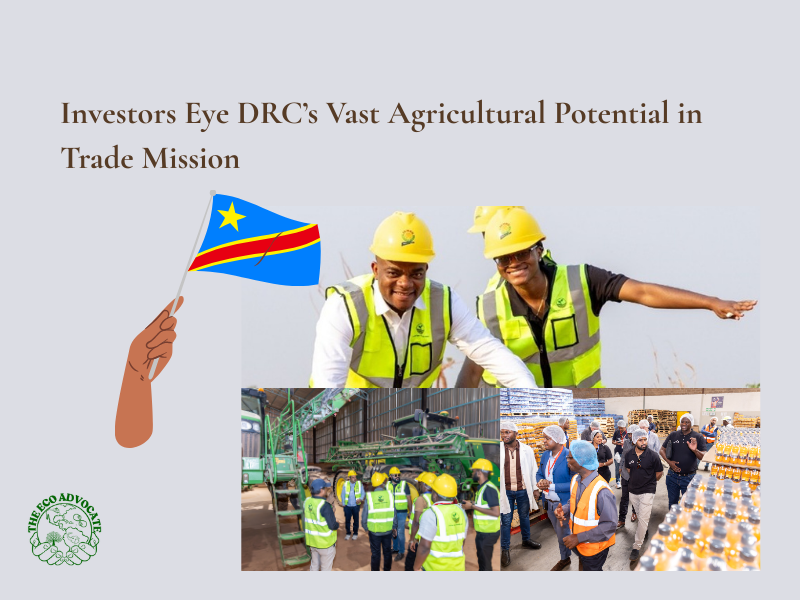
Agriculture in the Democratic Republic of Congo (DRC) is experiencing a significant transformation, capturing the attention of the global community. Historically associated with mineral resources and conflict, the DRC is now emerging as a key player in Africa’s agricultural landscape, presenting opportunities for a green revolution.
In September 2025, Equity Bank organised a five-day trade mission in Lubumbashi, attracting investors from across Africa to explore the potential of food production in the DRC. Participants witnessed a country rich in agricultural prospects, characterised by extensive maize cultivation, mechanised farming equipment and bottling plants striving to meet growing regional demand. This shift goes beyond agriculture; it reflects a broader commitment to eco-driven development, and stakeholders are encouraged to engage in this promising opportunity.
From Earth-Stone Soils to Maize Empires
The mission included a visit to Jambo Farming Company, located two hours south of Lubumbashi. Covering an area of 4,500 hectares, Jambo operates as an industrial agricultural enterprise equipped with advanced machinery, including 410-horsepower tractors, 14.5-meter ploughs and 35-meter spray booms, which can treat 15 hectares in a single pass. During the peak ploughing season, the operation utilises approximately 5,000 litres of diesel each day.
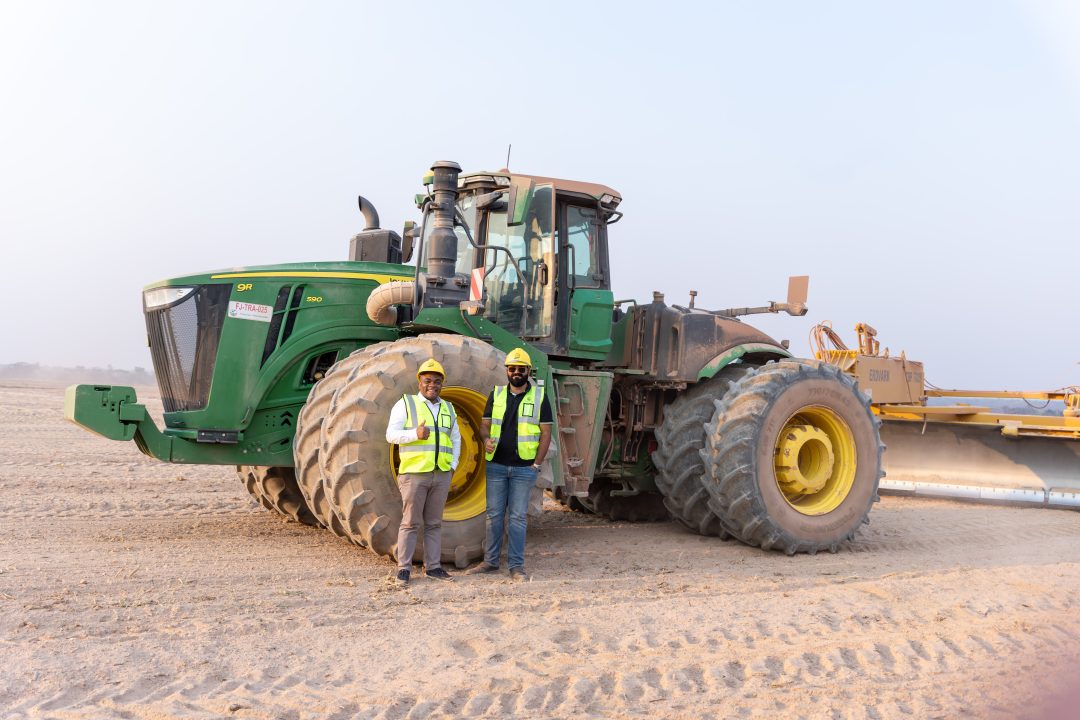
Equity Group EquityBCDC Associate Director for Commercial Projects and Sectors Paty-Paterne Mushagalusa (left) and Jambo Farm Director Vishal Fatania (right) before the levelling tractor.
Despite its impressive output of 22,000 tonnes of maize annually, Jambo, along with two similar farms, satisfies only 7% of Katanga’s maize demand, indicating a significant opportunity for ethical investors and eco-entrepreneurs in the region.
Vishal Fatania, the Director of Jambo, highlighted that the shallow water table in the area makes irrigation quite feasible. Although the soil presents challenges, utilising the appropriate equipment and farming techniques can achieve yields of up to 7 tonnes of maize per hectare, comparable to some of the top-performing farms worldwide.
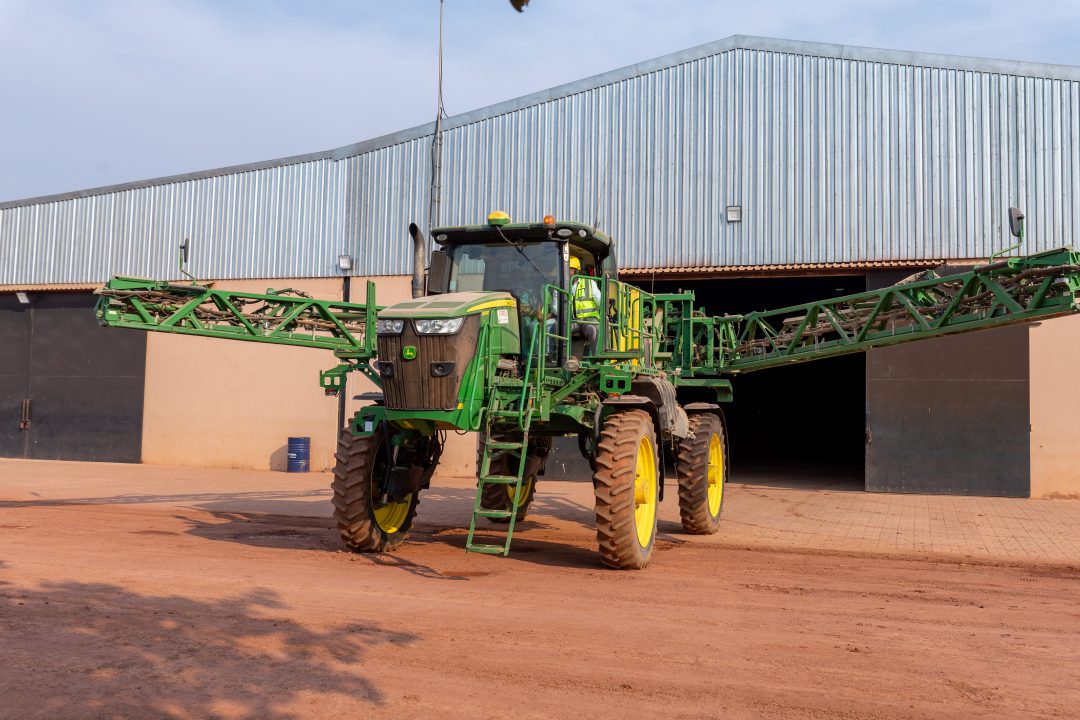
The US$500,000 spray raise tractor with retractable spray wings has a tank with capacity to cover 15 hectares in one deployment.
Equity Bank: More Than Just a Lender
Equity Bank is playing a pivotal role in promoting agricultural growth through its Africa Recovery and Resilience Plan (ARRP). The bank has allocated 35% of its loan portfolio in the Democratic Republic of the Congo (DRC) specifically to agriculture and is willing to syndicate up to $4 billion for key agricultural projects. They offer loans of up to $20 million, but their assistance extends beyond just financial support.
Esther Thongori, CEO of Lohim Company, highlighted the bank’s valuable cross-border services and mentorship. She stated, “Equity is a very supportive bank, not only financially but also by extending a guiding hand to anyone seeking to grow their businesses.” This unique combination of financial resources and capacity-building initiatives is crucial for scaling sustainable agricultural practices effectively.
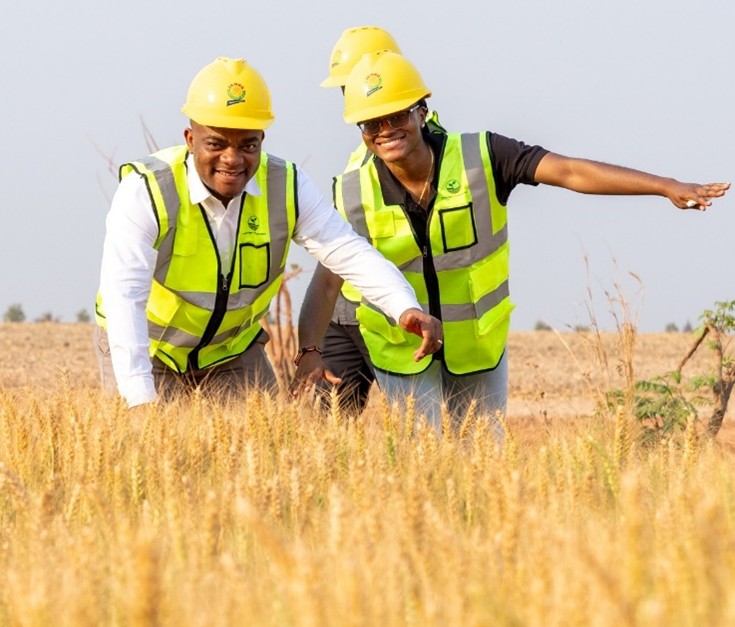
Equity Group EquityBCDC Associate Director for Commercial Projects and Sectors Paty-Paterne Mushagalusa (left) and Trade Mission Officer Sarah Esongola appreciate the wheat in the pilot farm.
More Than Crops: The Bottling Boom and Logistics Opportunity
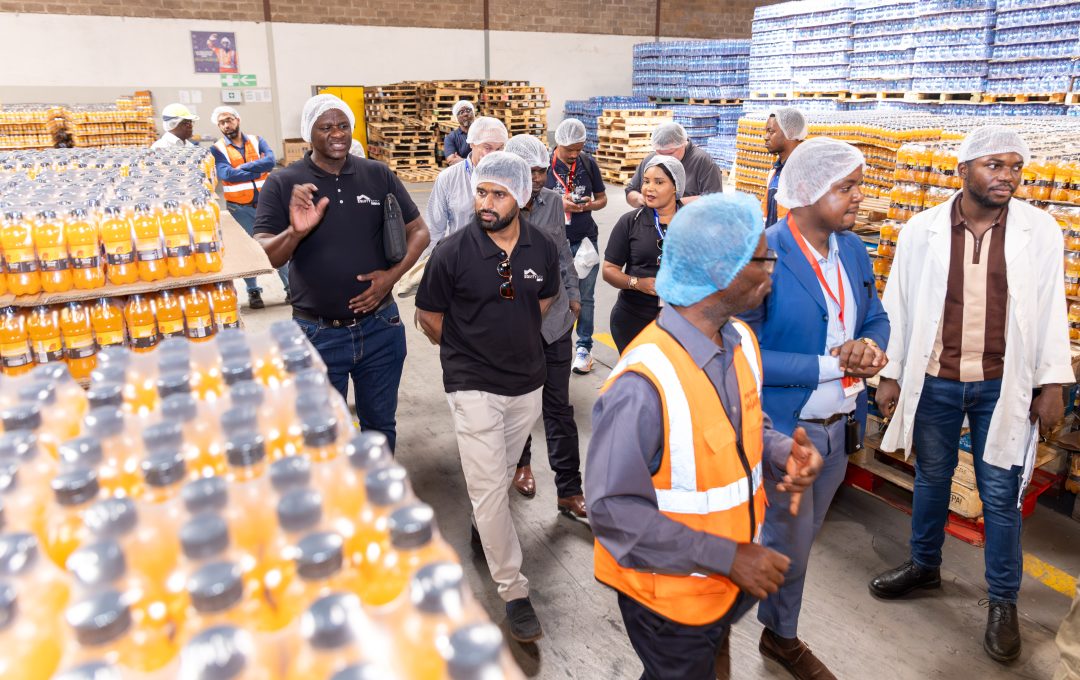
Agriculture continues to play a vital role beyond the harvest, as evidenced by the recent tour undertaken by investors at Hyper Psaro, a bottling plant located in Lubumbashi. This facility is currently addressing the rising demand for bottled water and beverages, with 70% of its products distributed locally and 30% shipped to Kinshasa. The transportation of goods to Kinshasa, approximately 2,300 kilometres away, can be particularly challenging, taking up to a month during the rainy season.
The plant faces significant challenges due to an unstable electricity supply, which necessitates the use of generators and solar lighting. This situation limits production capacity, even as demand for bottled products continues to increase. However, this also highlights a significant opportunity for innovation in key areas such as bottling, logistics and renewable energy.
Potential investment avenues include the development of solar-powered bottling lines, the use of eco-friendly packaging solutions and the establishment of decentralised cold-chain logistics. In the Democratic Republic of the Congo (DRC), every weakness in the supply chain represents a chance to innovate and improve the overall system.
The Youth and Women Advantage
Agriculture in the Democratic Republic of the Congo (DRC) plays a critical role in the economy and the livelihoods of its people. It is particularly significant in empowering women and youth, who represent a substantial portion of the rural workforce, with over 60% of the population being under the age of 25. However, many of these individuals face challenges such as limited access to land, credit and technical training.
The importance of inclusive investment in agriculture cannot be overstated. Initiatives such as women-led cooperatives, youth-operated agritech startups, and community-managed irrigation schemes are essential for shaping the future of agriculture in Africa. By providing the necessary support, the DRC has the potential to nurture a new generation of environmentally-conscious entrepreneurs.
Innovative solutions are already on the horizon, including tech-driven farms utilising solar-powered irrigation systems, drones for soil health assessment, and packaging solutions created by local youth using biodegradable materials. These advancements illustrate that a sustainable agricultural future is not merely aspirational but is actively being pursued.
Green Farming for a Blue Planet
The Democratic Republic of the Congo (DRC) is home to the world’s second-largest rainforest, highlighting the importance of responsible agricultural practices in the region. To ensure sustainability, investors should prioritise regenerative agriculture, which focuses on enhancing soil health, protecting biodiversity and sequestering carbon.
Key practices in regenerative agriculture include:
- Crop rotation and cover cropping
- Drip irrigation powered by solar energy
- Organic composting as an alternative to chemical fertilisers
- Implementation of agroforestry and buffer zones
Farms like Jambo have the potential to serve as exemplary models of not only productivity but also environmentally friendly production methods. For environmentally conscious investors, these innovative approaches represent significant opportunities for both positive environmental impact and financial returns.
Fixing the Flow: Infrastructure Is the Missing Link
Logistics plays a crucial role in the agricultural economy, especially in regions like the Democratic Republic of the Congo (DRC), where the effectiveness of harvests can be significantly hindered by inadequate infrastructure. Challenges such as poor road conditions, fuel shortages and unpredictable seasonal weather contribute to substantial bottlenecks in the logistics sector.
However, this creates opportunities for innovation. Advancements such as electric trucks, intermodal freight hubs and real-time supply chain tracking systems are essential components of smart logistics. Rather than viewing current inefficiencies as obstacles, they can be seen as indicators of potential solutions that could lead to significant financial gains in the agricultural sector. The pursuit of improvements in logistics could pave the way for billion-dollar opportunities in this vital area.
The Bigger Picture: Ecosystems, Not Silos
The recent trade mission emphasised a crucial message: the Democratic Republic of the Congo (DRC) requires ecosystem builders in addition to investors. With its abundant natural resources, skilled workforce and market demand, the DRC has the potential to emerge as a leading agricultural hub in Africa. However, achieving this potential necessitates collaboration across various sectors.
Key areas for focus include:
- Financial institutions supporting a broader range of agricultural initiatives beyond just crop financing.
- Government investment in rural infrastructure, such as road development, to improve access and transportation.
- Private companies are contributing to the establishment of clean energy facilities to promote sustainable practices.
- Non-governmental organisations (NGOs) providing training for farmers in climate-smart agricultural techniques.
By adopting a public-private partnership model, the transformation of the DRC’s agricultural landscape can move from possibility to inevitability.
Redefining the Narrative: Changing How We Talk About DRC
A significant shift in perception is crucial for the Democratic Republic of the Congo (DRC). Often, the narrative surrounding the DRC focuses on its challenges rather than its vast potential. By changing this perspective, we can start to highlight the DRC’s potential for climate leadership instead of associating it solely with conflict.
The DRC has opportunities for productivity rather than just being viewed through the lens of poverty, and it could shift towards regeneration rather than being seen merely as a source for extraction. This transformative change relies on the collective efforts of various stakeholders, including eco bloggers, ethical investors, sustainable brands and engaged readers, all of whom are committed to sharing a more comprehensive and balanced story about the DRC.
Conclusion: Seeds of Change, Fields of Possibility
The Democratic Republic of the Congo (DRC) is not seeking charity; rather, it presents an opportunity to engage in one of Africa’s most dynamic agricultural transformations. The country is witnessing developments ranging from large-scale farming initiatives to innovative microgrid projects, as well as advancements in irrigation techniques. There is significant potential for reinvention in various sectors.
For those who are environmentally conscious, impact-driven, and willing to take bold steps, now is an opportune moment to get involved. The DRC boasts rich, fertile soil, clear demand for agricultural products, and a promising future for sustainable development in agriculture.
5 Quick FAQs
1. What makes the DRC ideal for agriculture?
Fertile soil, a favourable climate, abundant water and extensive arable land, along with increasing regional demand.
2. How can I invest in DRC’s agri-sector?
Collaborate with local companies, explore Equity Bank’s Agricultural and Rural Development Policy and participate in investor trade missions.
3. Is sustainable farming possible at scale in the DRC?
Yes, large-scale operations can be eco-friendly by utilising practices such as drip irrigation, agroforestry and regenerative farming.
4. What other sectors are tied to agriculture here?
Logistics, renewable energy, bottling, packaging, technology and education are all important sectors.
5. Why now?
Due to the widening opportunity gap, infrastructure is improving, and the urgency for investment, both financial and ecological, has never been greater