Today marks a significant milestone in conservation, and we have reason to celebrate. Renowned artist Ellie Goulding and her collaborators, including Kenyan actor-musician Bien Aimé, have successfully raised Sh52 million for wildlife and habitat protection in the Democratic Republic of Congo. This achievement is a beacon of hope, not just for the Congo but for all of Africa, signalling that our wildlife and ecosystems can engage global attention and attract essential support.
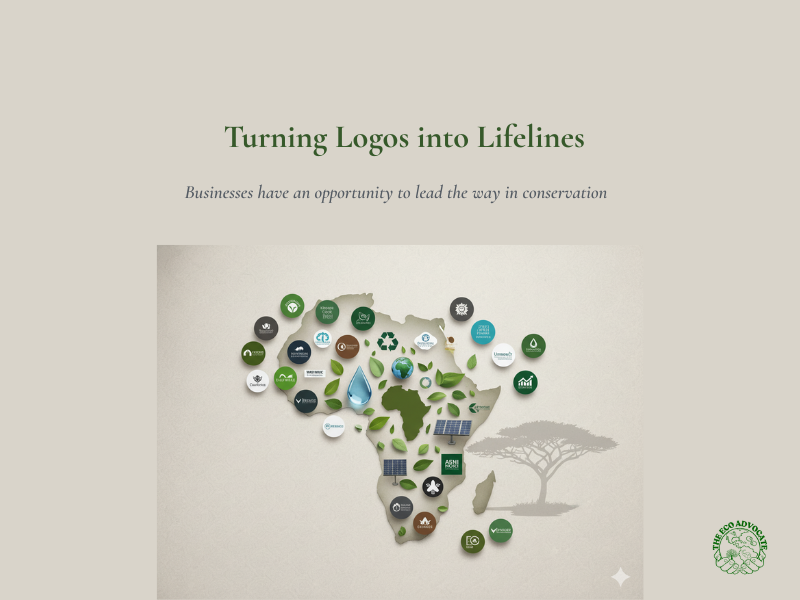
However, as we rejoice in this accomplishment, we must recognise that celebration alone isn’t enough. Across Africa and the world, numerous businesses, brands, and organisations feature wildlife imagery, such as the iconic lions, elephants, and rhinos that often grace logos and marketing campaigns. This presents a unique opportunity: what if every entity that incorporates wildlife in its branding committed a portion of its profits to conservation efforts?
Let’s explore why this matters, how it could be implemented in practice, and how it can reshape our relationship with nature in Kenya, Africa, and beyond.
1. Why This Moment Should Matter
In Kenya, the urgency of wildlife conservation is a familiar struggle. From the vast savannahs of the Maasai Mara to the lush forests of Mau and the diverse coastal ecosystems along the Indian Ocean, our species faces numerous threats. Habitat loss, poaching, the impacts of climate change and human-wildlife conflict pose significant challenges to survival.
When I learned that $52 million was raised for conservation in the Congo, it struck me that the value society places on nature is rising, alongside the demands for its protection. If global celebrities are stepping up, it prompts us to reflect on the role our economy, businesses and brands can also play in safeguarding our wildlife.
From an African perspective, our wildlife icons are more than just aesthetic symbols; they are crucial to our biodiversity, ecology and cultural identity. Using animals like elephants or lions merely for their visual appeal, without acknowledging the responsibility that comes with their representation, risks undermining their significance.
2. The Brand-to-Conservation Hypothesis
This brings us to the core idea: if a brand chooses to use wildlife imagery, like a rhino silhouette or an elephant tusk in its logo, there is an implicit moral obligation to contribute to the conservation of that species or habitat.
Here’s how it could work
Step 1: Identify if your brand uses any wildlife imagery in its logo, promotional materials or product range, whether intentionally or incidentally.
Step 2: Select a relevant conservation partner or project. For brands based in Kenya, consider collaborating with the Kenya Wildlife Service (KWS) or a local community conservation initiative. For larger African or global brands, think about a regional trust that focuses on the specific species or ecosystem depicted.
Step 3: Pledge a fixed percentage of your profits (perhaps 1-5%) or a set amount per item sold to support your chosen conservation partner. It’s essential to track and publicly share these contributions annually.
Step 4: Use your brand communications to share the story, like saying, “Since we feature the African elephant in our logo, we commit to…” Being transparent about this commitment is crucial.
Why it could work
- It aligns your brand’s image with tangible action, stepping away from mere greenwashing.
- It leverages the marketing power of the brand to direct valuable funds into conservation.
- It offers consumers a meaningful choice by encouraging them to engage with brands that actively support the wildlife they represent.
Potential objections
Some may argue, “We only used the imagery; we never intended to signify conservation.” This perspective falters when considering that profit is still being made from imagery that represents an endangered species. Others might claim, “This adds extra costs, reducing our competitiveness.” While valid, these brands already incorporate symbolic value into their pricing, thus carrying a responsibility alongside it.
Concerns regarding monitoring and accountability are essential; without independent verification, pledges could remain unfulfilled promises. Any framework must include auditing and reporting to ensure integrity.
3. Why Kenya and Africa Must Lead
Kenya boasts globally renowned species such as elephants, rhinos, lions and giraffes, alongside ecosystems that draw tourists, researchers and philanthropists from around the world. Yet, our wildlife populations are under immense pressure. For instance, the African elephant population has faced a drastic decline of over 100,000 individuals between 2016 and 2020 in various regions. While I cannot provide precise figures for Kenya without updated data, the trend is alarming.
Brands benefitting from these iconic species must acknowledge that there’s an environmental cost associated with every image used. If Kenyan and African brands adopt this model, we can set a benchmark for the global marketplace. Rather than mere symbols, African wildlife could represent a shared responsibility for their conservation.
This approach also highlights that conservation funding doesn’t solely have to rely on donor aid; it can be integrated into mainstream commercial activities.
When global stars raise millions for conservation in the Congo, we celebrate their efforts. But we should also challenge ourselves: why not create a coalition of Kenyan brands that channel similar funding into our own ecosystems?
4. Practical Steps for Businesses and Brands
If you run a business, consider adopting this practical checklist:
Audit your brand: Do you incorporate wildlife imagery? Which species are featured? What promise or message does it convey?
Select your conservation partner: Identify organisations or projects that align with your brand values and the wildlife you feature.
Commit to a percentage: Decide on the fixed percentage of profits or contribution per product sold that will go to supporting your partner organisation.
Communicate your commitment: Share your story with customers, reinforcing the connection between your brand and your dedication to wildlife conservation.
Taking these steps, businesses have an opportunity to lead the way in conservation, transforming how we interact with nature and ensuring that the diverse beauty of our ecosystems endures for generations to come.