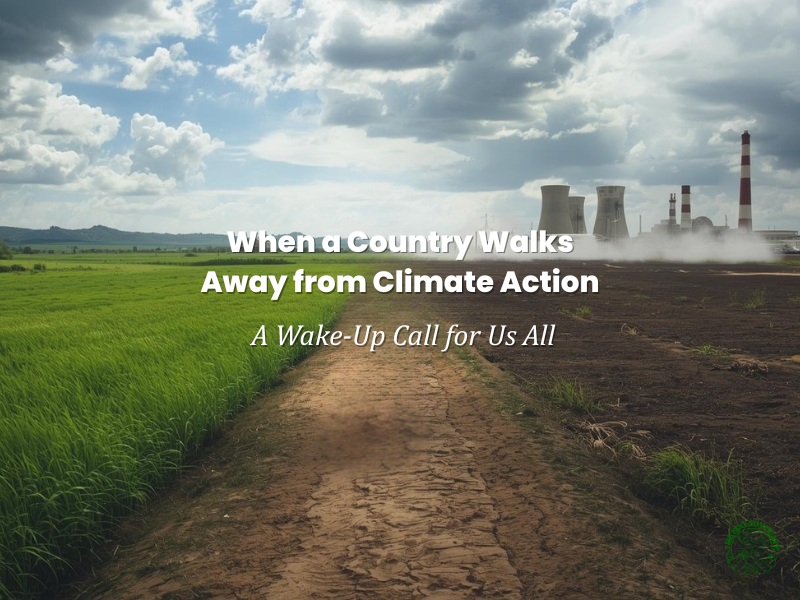
Recently, we witnessed a bold move from one country that has officially stepped away from a global climate pact. It was hard to miss the wave of emotions that rippled across the globe: shock, sadness, anger, and fear. And honestly, those feelings are justified.
In a world already grappling with floods, droughts, heatwaves, and food insecurity, this decision felt like a betrayal, especially to those living on the frontlines of our climate crisis. But as the dust of outrage settles, we face an uncomfortable reality: for too long, global climate action has been filled with grand statements but next to no real results. It often seems like endless negotiations have barely differed from throwing up our hands and giving up altogether.
One country has clearly declared, “We are not in.” Meanwhile, the rest of the world has remained in the pact, but not always with the same level of commitment or action. This isn’t an excuse for one country’s withdrawal; rather, it poses a challenge to all of us who are still in the game.
The Departure: Shocking, Yet Inevitable
Let’s be honest, many of us saw this coming. Global climate agreements have been marred by the same issues over and over: delayed funding, weak accountability, political backtracking, and promises that unravel as soon as leaders return home. We see targets announced with excitement, only to have them quietly missed later. Reports are published, and yet emissions continue to rise. Adaptation plans get drafted, but vulnerable communities remain exposed.
So, when a country finally decides to walk away, the pressing question shifts from “Who left?” to “What exactly have those who stayed achieved?” If one exit can send shockwaves through an entire system, perhaps that system was already on shaky ground.
Climate Change: A Daily Reality
For many in places like Kenya, whether in Nairobi, Turkana, Garissa, Kilifi, or Kajiado, climate change is not just an abstract idea. It’s a real and daily struggle. Picture farmers staring hopelessly at failed rains, pastoralists watching their livestock wither away from drought, coastal communities facing the relentless erosion of their lands, and urban residents dealing with floods that overwhelm their cities.
Africa is one of the least guilty contributors to global emissions, yet it finds itself bearing the brunt of climate change’s impact. While this imbalance is recognised in climate forums, the necessary resources and urgency often fall short of matching the rhetoric. When global agreements falter, the consequences rarely affect everyone equally; those with the least capacity to adapt feel the heaviest toll.
Simply Staying Isn’t Enough
There’s a dangerous belief that just being part of a global pact translates into actual progress. It doesn’t. Signing an agreement doesn’t automatically cool the planet. Attending conferences doesn’t shield a farmer from drought. Publishing a national plan doesn’t guarantee that real, positive changes will happen on the ground.
Sometimes, staying within these frameworks serves as a convenient way to sidestep tough decisions, offering a façade of commitment while allowing business as usual to continue. Withdrawal may be dramatic, but inaction is often quieter and can be even more harmful.
What Needs to Change
If we can see the collapse of climate action emanating from one country’s exit, then our response shouldn’t just be to plead for their return. Instead, we need to build something stronger—something more grounded and less susceptible to the whims of politics. Here’s how we can move forward:
1. Invest in Local, Community-Led Solutions
True climate resilience isn’t forged in conference rooms. Across Kenya and the Global South, communities are finding ways to adapt, restoring ecosystems, conserving water, shifting livelihoods, and protecting biodiversity, often using limited resources. These grassroots efforts thrive because they’re rooted in local knowledge and realities. They shouldn’t be sidelined; they need to be empowered and funded.
2. Demand Accountability Beyond Words
Our climate discussions are saturated with pledges and reports, but what’s truly lacking is accountability. Failing to meet targets shouldn’t be brushed off as a minor inconvenience. We need to move from voluntary reporting to tangible, measurable action, especially for those countries that bear historical responsibility.
3. Ensure Climate Finance Reaches the Most Affected
Climate finance is often uneven, favouring large projects and powerful institutions over the communities most impacted by climate change. It’s crucial to prioritise funds based on vulnerability and need, rather than political clout. Otherwise, the gap between lofty global promises and the harsh realities on the ground will only keep widening.
4. Focus on Immediate Adaptation and Resilience
While reducing emissions is vital, for many in Africa, adapting to climate change is a question of survival. We need essential tools like early warning systems, climate-resilient agriculture, water security, and urban planning. Now, not later. The time for action is here, and we can’t afford to wait.
In the face of such daunting challenges, the choice before us is clear: we can either continue down this path of inaction or we can rebuild a movement that is rooted in genuine commitment and local realities. A world where we all contribute to climate resilience is possible, but it requires a collective effort, one that prioritises people over politics.