
Have you ever watched a child eat a vegetable they grew themselves? It’s a different kind of meal. Slower. Prouder.
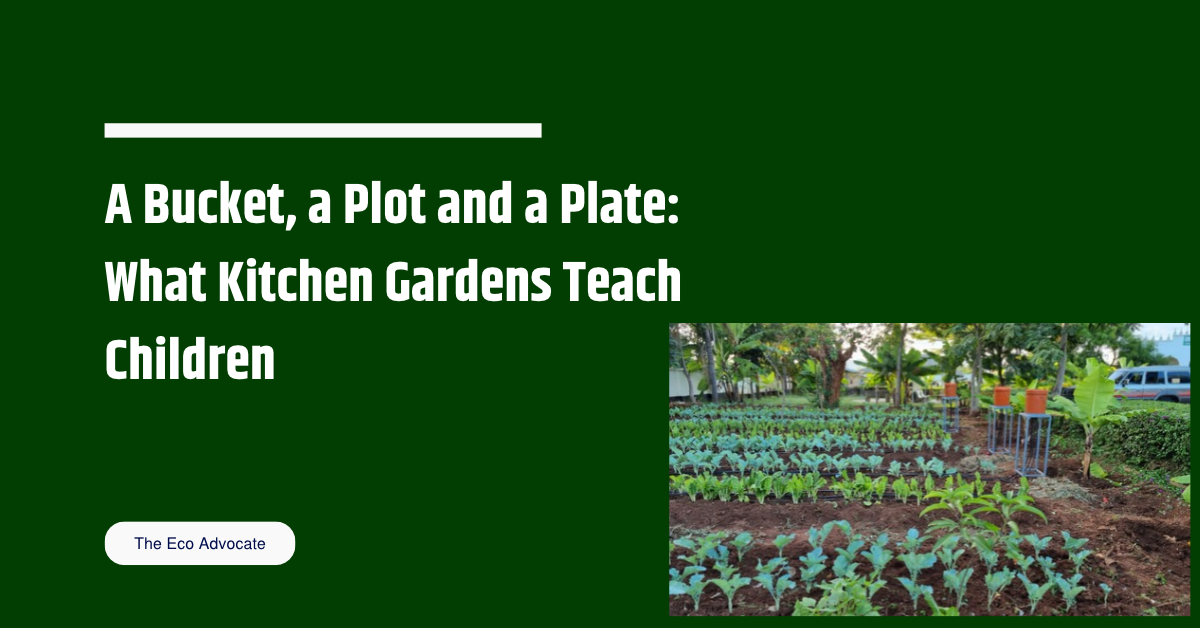
That moment is the heart of Kitchen Gardens for Kids, The Eco Advocate’s project setting up drip-bucket vegetable gardens at schools and children’s centres. From Garissa to Voi, children are now eating from gardens they planted, watered and protected.
What is a drip-bucket garden?
It is a raised bucket of water connected to a drip line that feeds a small vegetable bed, drop by drop. It needs very little water and very little space, which is exactly why it works in dry places.
Why do children in these areas need it?
Because they live on the frontline of the climate crisis. UNICEF’s Kenya risk model found that about 12 million Kenyan children face moderate to very high climate and disaster risk, with Garissa among the seven counties rated very high, and about 9 million children exposed to drought and water scarcity. A garden doesn’t solve that. But it gives children fresh food and a sense that they can do something.
What do children learn from a garden?
FAO describes school gardens as “a platform for learning” that can improve the nutrition of children and their families and build long-term food habits. In our gardens, I see it in practical ways:
- They eat more vegetables because the vegetables are theirs.
- They take ownership. Nobody has to remind them to water “their” plants.
- Teachers use the garden for science, maths and nutrition lessons.
- Children take ideas home, and some families start gardens of their own.
When do the gardens do best?
The rainy season gives every garden a head start. Soil softens, buckets refill faster, and seedlings establish before the dry months. That’s why November is our planting month.
How can you help?
- If you run a school or children’s centre that wants a garden, message me.
- If you’re a parent, start one bucket at home; tomatoes, sukuma wiki, or spinach are forgiving first crops.
- If your organisation supports school feeding, nutrition or education, let’s talk about the next gardens.
A child who grows food never sees soil as dirt again.
Do you remember the first thing you ever grew? Tell me in the comments.


Discover more from The Eco Advocate
Subscribe to get the latest posts sent to your email.


