
How many litres of free water ran off your roof the last time it rained? Did any of it stay?
For most homes and schools, the honest answer is “almost none.” We watch water pour off iron sheets and into the drain, then pay for water in February. This season, with above-average short rains forecast for much of Kenya, is the best chance in years to change that habit.
What is rainwater harvesting?
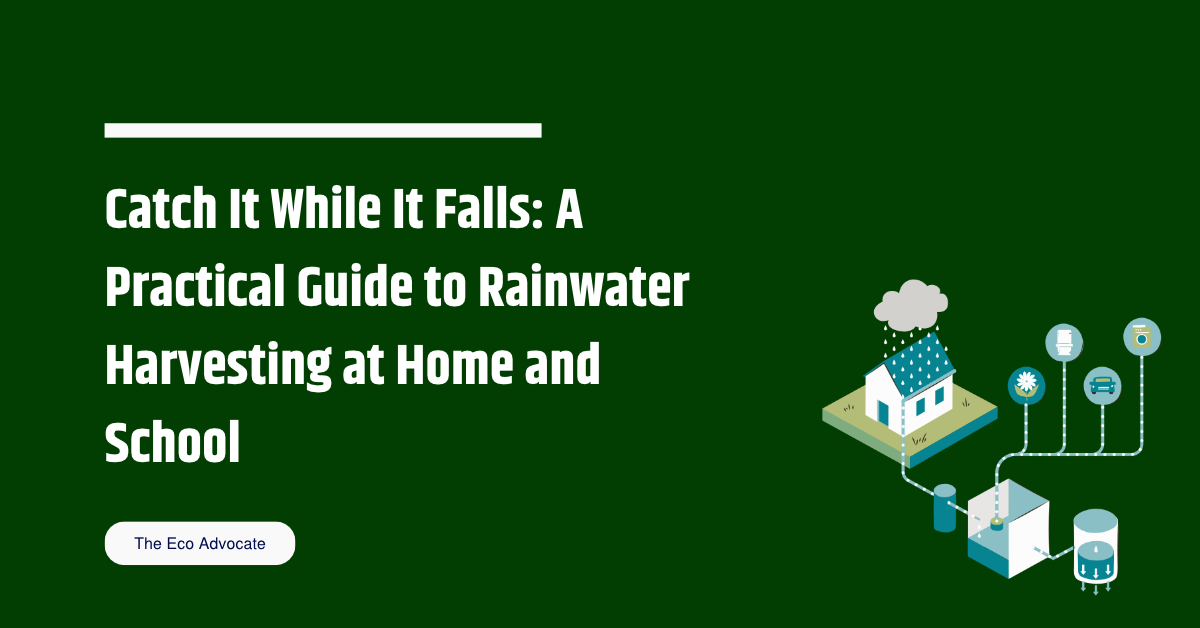
It is simply catching rain where it falls, usually from a roof, and storing it for later. A system has four parts: a catchment surface (the roof), gutters and pipes, a first-flush diverter that throws away the dirtiest first water, and a storage tank with a tap.
Why does it matter now?
Because our seasons are swinging harder. Drought hit more than 8.5 million people in East Africa in 2025, and this year we may face floods. Storage is what turns that swing into security. A tank won’t stop a drought, but it buys a household, a clinic, or a school weeks of breathing room.
Who benefits most?
Schools, first. Children need water to drink, to wash their hands, to keep toilets clean and to grow food. Kenya has a long record of school rainwater projects and researchers have gone back to study how school systems in Nyanza held up years after installation, alongside follow-up work from the SWASH+ school pilots. The recurring lesson from this kind of work is not about tanks. It’s about ownership and upkeep.
Where do systems usually fail?
Not on installation day. They fail later: a cracked gutter nobody fixes, a tap that breaks, a tank that’s never cleaned, a key that goes missing when a teacher transfers. A system without a named owner slowly stops working.
How do you start, practically?
- Measure your roof. A larger roof catches more. Even a small house roof can fill a tank over a good season.
- Fix the gutters first. Leaking or sagging gutters waste most of the water before it reaches storage.
- Add a first-flush diverter. It sends away the dust and droppings that wash off first.
- Start with one tank. Get one system working well before you plan an ambitious one.
- Give it a job. Link the water to something that matters, i.e handwashing, a kitchen garden, cleaning toilets.
- Name an owner. One person checks gutters monthly and cleans the tank before each rainy season.
- Treat drinking water. Boil or filter harvested water before drinking it.
Rain is a gift. What we do with it is a choice. This week, make one choice that keeps a little of it.
Does your home or school harvest rainwater? What’s worked and what broke? Tell me below.


Discover more from The Eco Advocate
Subscribe to get the latest posts sent to your email.


