
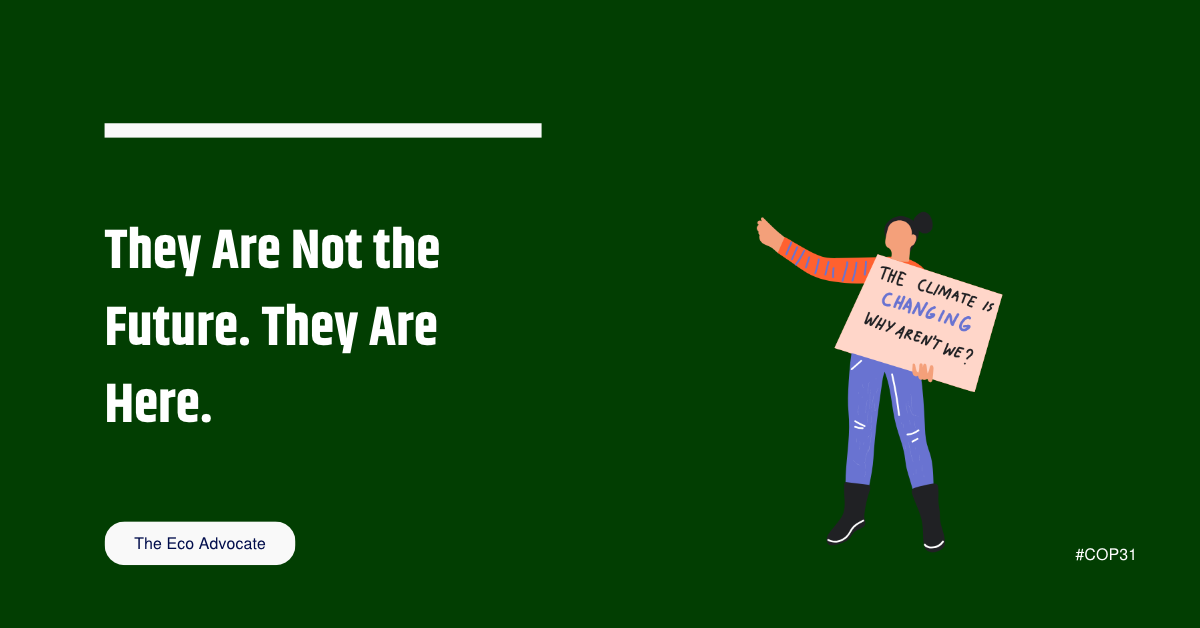
How old were you when you first understood that the planet was in trouble? For many young people today, the answer is: as soon as they could understand anything at all.
On 14th November, COP31 dedicated its sixth day to children, youth, education and skills. And honestly? It was the day that moved me most.
What did young people say?
About a week into COP31, more than 100,000 children and young people from over 100 countries had contributed to a Global Youth Statement. Their message was clear: stronger climate action now, and a meaningful role in the negotiations, not just a photo opportunity.
Whose stories stood out?
A young climate advocate from Nepal described how floods disrupted their schooling. Think about that. A child losing school days, not to illness or poverty, but to a changing climate.
Francisco Vera from Colombia started attending climate summits at age 11. He later had to leave his country after receiving death threats. Standing up for the planet still carries a real price for young activists.
And in Brazil, children’s ideas helped shape a public space called the Plaza of Dreams. Proof that when we listen to children, we design better places.
Is education finally on the agenda?
Yes, and that matters. Climate education now appears in countries’ national climate plans, something experts called a game-changer. The fifth edition of the Teachers’ COP also met in Antalya, pushing classrooms beyond awareness and into action.
What happened outside the halls?
Thousands of people marched through the rainy streets of Antalya, demanding climate justice. The Peoples’ Climate Summit opened that same day, running until 18 November. Campaigners called for public adaptation finance, not loans, and for a just transition mechanism to protect workers.
Inside, week one’s technical negotiations wrapped up. At a midway stocktake, countries began to show their red lines. Adaptation finance and the transition away from fossil fuels remained unresolved.
Why does this matter to me?
Because I have seen it with my own eyes. When we take children to Nairobi National Park, something changes in them. A child who watches a giraffe walk past the city skyline does not forget it. Wonder becomes care. Care becomes action.
What can you do?
- Take a child outdoors this week: a park, a forest, a riverbank.
- Support teachers and schools bringing climate lessons into class.
- Amplify young climate voices online, especially African ones.
- Ask leaders how young people will be included in Kenya’s climate decisions.
Teach a child to love nature, and you raise a defender for life. Young people are not the future of this fight. They are already in it, so let’s stand beside them.
Tomorrow: Day 7, the Sunday pause, and my scorecard for week one.


Discover more from The Eco Advocate
Subscribe to get the latest posts sent to your email.


