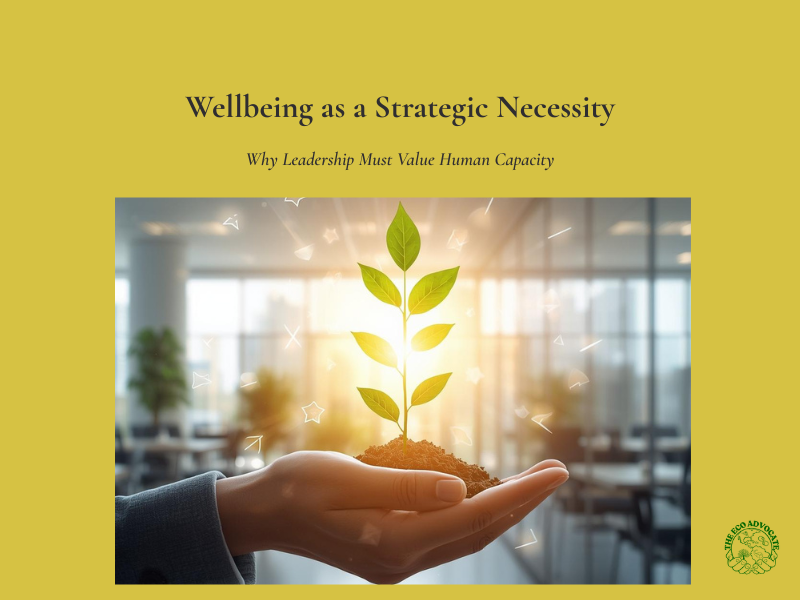
Many organisations still view workplace wellbeing as a luxury, something optional to consider when resources permit. Yet, this perception couldn’t be more mistaken. Human capacity is a finite resource, and how we manage it represents a significant strategic risk for organisations. Leaders who overlook this risk may find themselves facing diminishing performance, decision fatigue, and the quiet departure of their top talent.
We observe this trend time and again: systems, whether they are ecological or human, cannot withstand relentless pressure without breaking. Sustainable leadership isn’t about depleting resources; it’s about ensuring recovery and regeneration.
The Strategic Risks of Neglecting Wellbeing
Every workplace has its challenges: urgency, lack of clear accountability, and constant pressure. These aren’t just personal stressors; they represent organisational risks that often manifest in critical ways, such as:
- Decision Fatigue: Leaders and their teams may struggle to make consistently high-quality decisions when overwhelmed.
- Compromised Output Quality: Work may be completed, but it risks being inaccurate or incomplete, affecting the overall effectiveness of the organisation.
- Silent Attrition: High performers often disengage quietly, sometimes preparing to leave without ever voicing their dissatisfaction.
These aren’t failures of individual character; they are indicative of systems that disregard human limitations.
The Importance of Human Systems for High Performance
It’s a common misconception that sustained performance depends solely on intense pressure. In reality, achieving high performance requires thoughtful design that prioritises focus, psychological safety, and energy management.
- Leaders who embody these principles often see their teams:
- Deliver consistently, rather than sporadically.
- Take initiative without the fear of burnout.
- Maintain clarity, even amidst complex operational demands.
Ultimately, the well-being of employees directly correlates with an organisation’s resilience and its capacity for long-term execution.
Leadership Practices That Safeguard Human Capacity
So, what actionable steps can executives and directors take to protect their teams’ well-being?
- Model Boundaries: Set realistic timelines and protect recovery time. Clear communication is essential.
- Prioritise Focus: Identify which tasks genuinely drive impact and eliminate redundant efforts.
- Encourage Reflection: Regularly assess what work creates true impact and where capacity is being wasted. Reflection should be viewed as a governance tool, not an optional exercise.
- Respect Talent: High performers value agency, clarity, and respect. Compensation alone often isn’t enough to keep talented individuals from considering other opportunities.
Recognising Early Signs of Systemic Strain
Ignoring the early warning signs of systemic stress can lead to significant risks, such as:
– Persistent fatigue among high performers
– A dwindling willingness to take initiative
– An increase in disengagement, often without explicit complaints
Leaders who remain vigilant and act early can mitigate the risk of losing their capacity, avoiding ethical lapses and operational errors.
Wellbeing as a Pillar of Operational Resilience
We must recognise that rest is not merely a perk or an indulgence; it is a critical aspect of effective risk management. Recovery isn’t a luxury; it is essential for maintaining sound judgment, ethics, and leadership quality. Just as our environmental systems can collapse under excessive exploitation, so too can our human systems falter when subjected to constant strain. The sustainability of leadership relies on our ability to regenerate rather than deplete our resources.
Designing Work Around Human Limits
Organisations that thrive are those that approach wellbeing as a foundational strategy:
– Reward clarity over a sense of urgency.
– Create systems that foster reflection and recovery.
– Showcase sustainable workload practices at the leadership level.
Effective leadership is not just about achieving results; it requires stewardship. Protecting human capacity is as vital to an organisation’s longevity as its financial health, technological assets, or market strategies.
A Crucial Message for African Leaders and Others
For Kenyan and African organisations navigating rapid growth or undertaking impactful missions in the realms of climate and development, the stakes couldn’t be clearer: failing to prioritise wellbeing is not simply a moral oversight; it’s a strategic blind spot that carries real consequences.
Investing in human sustainability is not a “soft” initiative; it is absolutely essential. Executive teams must design work systems that uphold judgment, energy, and talent. Only then can organisations truly achieve sustainable high performance.