
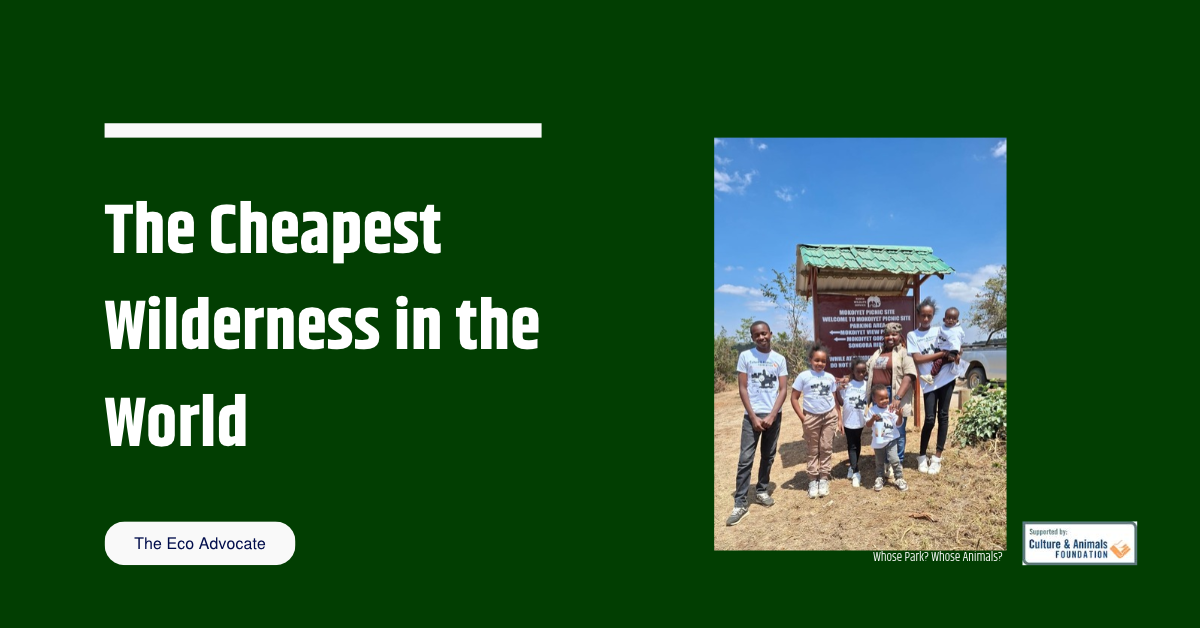
Have you ever lived seven kilometres from a lion?
Not a lion in a zoo enclosure. Not a lion on a screensaver. A real, wild, breathing lion, the kind that hunts at dawn and sleeps off a kill in the shade, the kind whose roar can carry across a valley on a still night. If you live in Nairobi, you have. Nairobi National Park sits closer to the Central Business District than some of the city’s own suburbs. You could, on a clear day, watch a giraffe browse an acacia with the Nairobi skyline rising behind it like a painted backdrop. No other capital city on earth has this. It is, quite literally, one of a kind.
So why do so many Nairobians who have lived their whole lives beside this park never once walk through its gates?
That’s the question this essay sits with. Not “is the park beautiful”, everyone already knows that. Not “should we conserve it”, anyone reading this probably already believes we should. The real question is sharper, and it’s less comfortable: who actually gets to use this park, and who is the pricing built for? Because a park’s fee structure isn’t just an accounting decision. It’s a statement. It tells you, in shillings and dollars, exactly whose access matters most.
Let’s follow the money and find out.
A family priced out, seven kilometres from home
Picture a family in Ongata Rongai, or in Imara Daima, or Langata itself, close enough to Nairobi National Park that they can sometimes hear it. Two parents, two kids. They’ve talked for months about finally taking the children to see the rhinos and lions everyone keeps posting about online. It’s not an exotic trip. It’s not even a trip, really, it’s a Saturday morning fifteen minutes from home.
Then they sit down to actually price it out.
Under the fee schedule currently in force, a Kenyan citizen adult pays KES 1,000 to enter, and a child pays KES 500. For two adults and two children, that’s KES 3,000 in personal entry fees alone, before a vehicle charge, before fuel, before anything else. A family that wants to self-drive adds another KES 600 for a small car. A family that wants a guided safari, because they don’t own a 4×4 suited to the park’s tracks, is looking at a private tour price on top of that.
Suddenly a “trip down the road” costs more than a family outing to a mall, a filling day of activities in town, or a month of data bundles. And this is the citizen rate, the cheapest tier that exists. It is not that this family can never afford it. It’s that a park seven kilometres away has become something you save up for, plan around, and maybe visit once a year if the school holidays line up. That is not what “urban” and “accessible” are supposed to mean.
Four tiers, one message
Here is where the pricing logic gets interesting, and where it starts to answer the “Whose Park?” question before anyone else gets to.
Kenya Wildlife Service (KWS) doesn’t just charge one fee. It charges by nationality and residency, and what used to be a simple two-tier system, citizens/residents on one side, foreigners on the other, has become a four-tier one. The current bands at Nairobi National Park are:
- East African Citizen (Kenyan and other EAC nationals): KES 1,000 per adult, KES 500 per child.
- Kenya Resident (non-citizens with valid residence documentation): KES 1,350 per adult, KES 675 per child.
- African Citizen (nationals of African countries outside the EAC): USD 40 per adult, USD 20 per child.
- Non-Resident (everyone else, the standard international tourist band): USD 80 per adult, USD 40 per child.
Do the math on that spread. A non-resident adult pays roughly ten times what an East African citizen pays for the exact same gate, the exact same lions, the exact same Saturday morning. There’s a defensible logic buried in that. Foreign visitors can absorb more, and channelling their spending into conservation funding is not, on its face, unreasonable. But look at what the structure also does. It builds a park whose everyday operating model depends on international demand being strong, predictable, and growing.
And that citizen rate hasn’t stayed still either. Until October 2025, Nairobi National Park had been sitting at KES 430 for a citizen adult, a figure that had barely moved in nearly two decades, according to the park’s own published fee history. The jump to KES 1,000 more than doubled it overnight. For the family from Rongai, that is the difference between “we can just about manage this” and “let’s push it to next year.”
Chasing the revenue
So where does all this money actually go, and how much has KWS actually been collecting?
Follow the trail and a clear shape emerges: park fees have become the engine, not a side income. KWS now draws around 90 percent of its internal revenue from tourism and conservation fees. By late 2025, the agency was framing this as a turnaround story: visitor numbers up from 2.36 million in 2022 to 3.38 million in 2025, a 43 percent rise, with domestic tourism now accounting for almost 70 percent of all visitors, and annual revenue “nearly doubled,” in the agency’s own words, from about Sh4 billion to Sh7.98 billion.
Where is that money supposed to go? On paper, into exactly the things a park needs to survive: anti-poaching patrols, ranger recruitment, habitat restoration, wildlife translocation, and infrastructure. Those are not cosmetic line items, this is real conservation work, and it costs real money. But the agency has also been blunt about the scale of the gap it’s trying to close, citing an annual shortfall in the order of Sh12 billion against what it says it actually needs to fully meet its mandate. The fee overhaul that briefly took effect in October 2025 was explicitly built to try to close that gap.
KWS’s own Regulatory Impact Statement for the fee overhaul puts a more precise figure on that gap: a modelled annual shortfall of roughly KES 10 billion, calculated separately from the roughly Sh12 billion figure the agency has cited in press statements, which suggests the exact size of “the gap” moves depending on which KWS document is doing the citing. The same statement breaks the projected revenue down park by park, and Nairobi National Park is not a minor line item: it is projected to generate roughly 16 percent of total park-fee revenue nationally, second only to Amboseli’s 25 percent, across a system of more than 30 gazetted parks and reserves. A 117 square kilometre park wedged against a capital city, generating close to one shilling in every six KWS expects to collect nationwide, is not a rounding error in this story. It is close to the second largest single revenue line in the entire system.
That is the real tension sitting underneath every number here. The conservation need is not manufactured, Kenya’s parks genuinely are underfunded relative to what they’re being asked to protect. But the instrument being used to close that gap is a fee wall that citizens feel first, hardest, and closest to home.
The fight over who decides the price
None of this happened quietly. If you’ve followed Kenyan news over the past two years, you’ve probably seen some version of this story: KWS proposes a fee hike, and the courts step in.
It started in November 2023, when tourism operators along the Kenyan coast filed a constitutional petition against a new conservation fee schedule, arguing KWS hadn’t properly consulted the public before setting it. The High Court in Malindi granted three separate injunctions in the space of a month that December, each time halting KWS’s attempt to push the new rates through. A proposal that would have pushed the Nairobi National Park citizen rate as high as KES 2,000 during that period never survived that legal gauntlet.
Then, in September 2025, KWS came back with a bigger, more comprehensive overhaul, the first full review of its fee structure in roughly eighteen years, and it took effect on 1 October 2025. It lasted one day. On 2 October, the Kenya Tourism Federation went to the Milimani High Court and won a conservatory order suspending the new fees, arguing KWS had given the industry only two days’ notice despite stakeholders having asked for a January 2026 start date to protect already-booked tour packages. The court restrained KWS from enforcing the new fees “until proper public participation, stakeholder consultation, and fair administrative process is conducted.” Business Daily reported the ruling as a direct financial blow to an agency that had built a Sh16.58-billion 2028 revenue target around exactly this fee schedule.
Notice something about who was in that courtroom. It wasn’t citizens’ groups. It wasn’t a coalition of Nairobi residents from Rongai, Kitengela, or Kibera arguing that KES 1,000 makes the park unreachable for ordinary families. It was the tourism industry, defending the predictability of its booking pipeline for foreign clients. The most visible, court-tested resistance to KWS’s pricing power has come from the businesses that profit from selling this park to the world, not from the people who live beside it.
Whose success is this, exactly?
Step back, and a pattern comes into focus that the raw numbers can’t quite say out loud on their own.
Every framing KWS uses to describe its own progress is a tourism-industry framing: visitor arrivals up, revenue up, Kenya positioned against Tanzania’s Serengeti and South Africa’s Kruger. Nairobi National Park is marketed abroad, repeatedly, deliberately, as “the world’s only wildlife capital,” an “urban safari” product built for exactly the kind of visitor who wants big-five wildlife squeezed into a layover between flights or a half-day break from a conference downtown. That branding isn’t accidental. It’s strategy.
None of that is inherently wrong. Tourism revenue funds real conservation. A park that earns its keep is, in some sense, a park more likely to survive the next funding crisis. But “success,” in this framing, is measured almost entirely in foreign visitor dollars and arrival numbers, not in how many Nairobi families walked through the gate last year, not in how many young people from Kayole or Dandora have ever seen a wild lion, not in whether the park still feels like it belongs to the city around it rather than to the travel industry that sells it.
Research on Kenya’s parks has long pointed to a colonial-era exclusion logic baked into how these spaces were originally set up: local communities marginalised from decision-making around the very land their lives were shaped by. This pricing structure isn’t a new problem. It’s an old one wearing new tiers.
This essay has been circling an honest tension the whole time: conservation genuinely needs the money. Rangers need salaries. Anti-poaching units need equipment. Habitat corridors need protecting from the same urban sprawl that makes this park so remarkable in the first place. None of that is free, and pretending otherwise helps no one, least of all the wildlife.
The same Regulatory Impact Statement also models how different categories of visitor are expected to respond to the new prices, and the assumptions built into that model are themselves a kind of confession. KWS’s own elasticity estimates treat non-resident foreign tourists as relatively price-inelastic, at around -0.1, meaning a large increase in the non-resident rate is modelled to barely dent demand. Citizens and residents are modelled very differently, at an elasticity closer to -0.5, meaning Kenyan visitors are expected to be roughly five times more sensitive to the same kind of price increase. In plain terms, the agency that designed this fee structure built it on the explicit, modelled expectation that foreign visitors will absorb a price hike without much change in behaviour, while Kenyan citizens will visit less. That is not a hidden side effect of the pricing tiers. It is the plan working as modelled.
But the way a park raises that money is never neutral. A four-tier fee wall that separates citizen from resident from African visitor from international tourist is also, quietly, answering a much bigger question before any of us gets a say in it: whose relationship with this park is treated as central, and whose is treated as a rounding error in a revenue model built for someone else’s itinerary.
What Nairobi residents themselves say
None of the numbers above needed to stay abstract for long. A short questionnaire circulated to Nairobi residents ahead of this essay’s final edit asked, plainly, what stands between them and the gate. The answers lined up with the fee schedule laid out above almost exactly.
“It feels more geared towards tourists than Nairobi residents,” one fully anonymous respondent wrote, and a second, separate respondent used almost the identical phrase, answering the same question. Entry fees and transport costs were, by a wide margin, the two reasons respondents gave most often for not returning, or not visiting at all, exactly the two costs this essay has spent several sections adding up.
Some had concrete fixes in mind rather than just complaints. “Creation of more awareness for Nairobi residents to know. Breakdown of costs and clear instructions on how to get tickets. Discount fees for school children and other adults,” one respondent suggested. Nearly every respondent who answered said free or subsidised entry would make them more likely to visit, several of them “definitely” so.
None of this contradicts the essay’s numbers. It confirms them, in the words of the people the fee schedule is actually pricing out.
A family that finally went, and a guide’s view from the gate
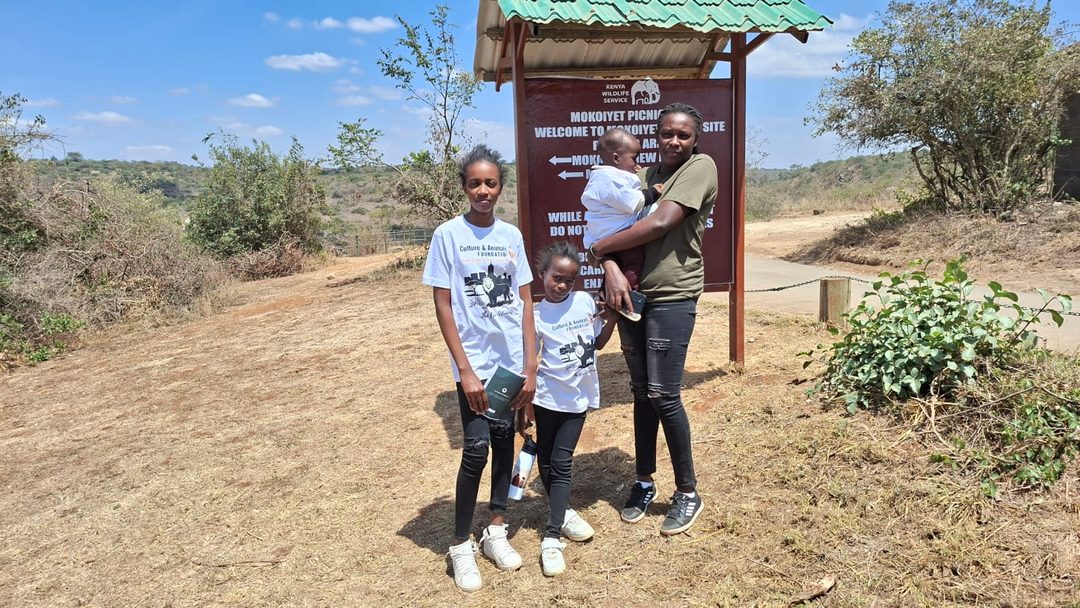
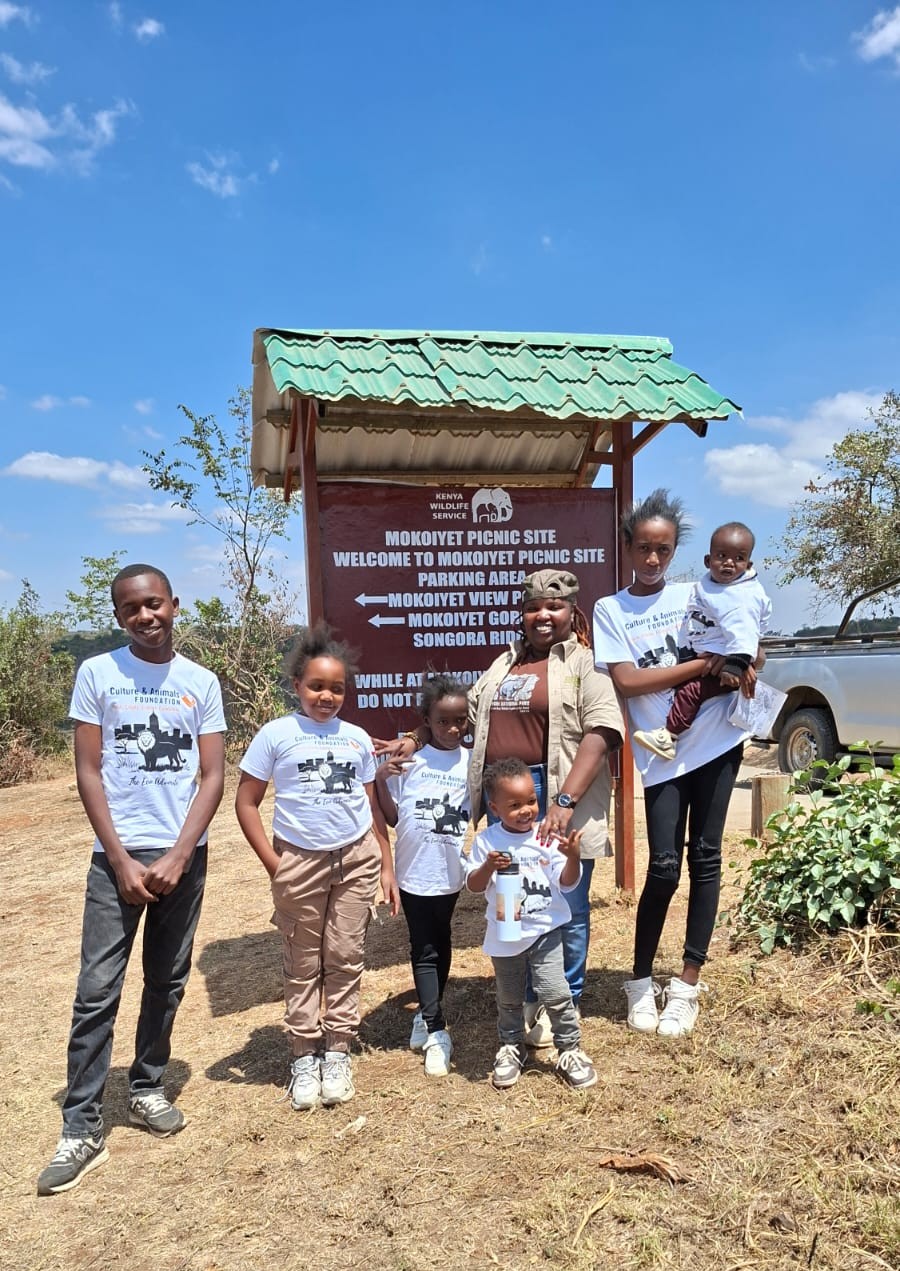
Some of this abstraction resolved into a single Saturday in September 2026, when this project organised a community game drive for children from Pipeline estate and Kangundo. One of the parents who joined, Dennis, told us he had last set foot in Nairobi National Park in 1993, as a boy, brought by his own father, and had never once brought his own children before this trip. He noticed how much the park’s infrastructure had changed since then, particularly the signage, and said the best moment of the day was watching zebras cross a river while a crocodile nearly caught one. He left planning a return visit before December, and talking, half-joking, about becoming a kind of park ambassador among the parents he knows. His story is not a statistic. It is what this essay’s numbers actually look like from inside one household: not indifference to the park, but a gap between wanting to go and getting around to affording it, closed, in his case, only because someone else organised and funded the trip.
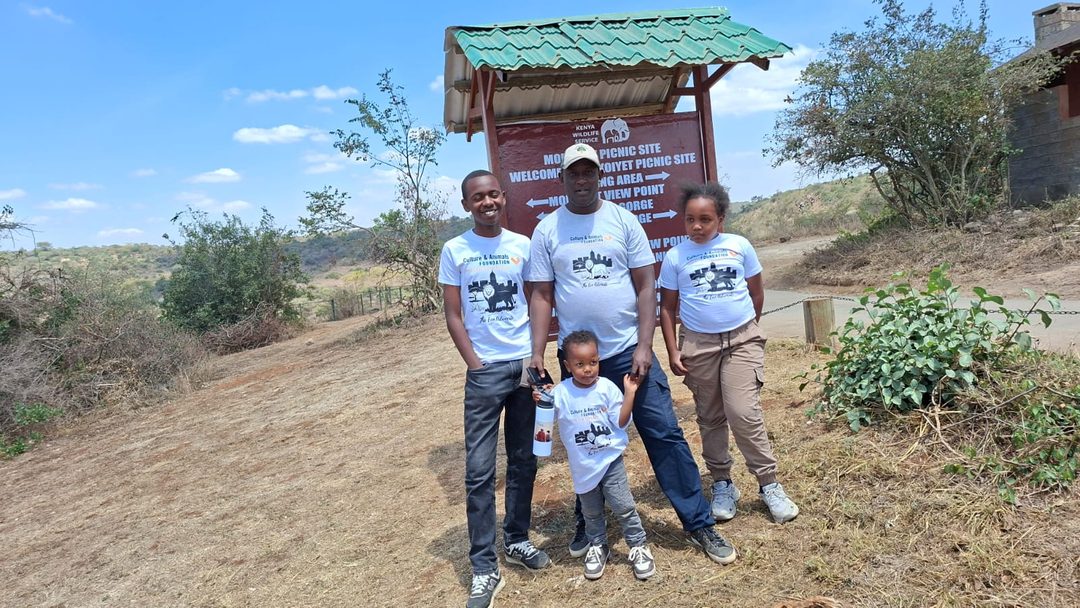
The same day, one of the park’s own tour guides, John, offered a different diagnosis of the same gap. Asked about pricing, he called KWS’s current fee structure basically reasonable, and argued the fix isn’t a lower citizen rate across the board but free entry for children specifically, on the theory that a family can realistically save toward a visit over a few months if it wants to. That push is worth putting next to what KWS already does: children aged 5 to 17 already pay half the adult rate in every visitor category, KES 500 rather than KES 1,000 for an East African citizen, and children under 5 are exempt entirely. John’s suggestion, in other words, is not asking KWS to invent a children’s rate from nothing. It is asking the agency to go from a 50 percent discount to a full waiver for everyone under eighteen, specifically to pull more domestic families through the gate. He also estimated that roughly 70 percent of the park’s visitors on any given day come from Europe or elsewhere in the West, against 30 percent local, though he was quick to add that the local share has been growing. Both things can be true at once: a park whose day-to-day economics still run on a majority-foreign visitor base, and a guide who genuinely believes the barrier for locals is more about savings habits than sticker price. Neither view cancels the other. Both belong in the record.
So what do we actually do with that?
This isn’t a call to scrap park fees, or to pretend Kenya’s conservation agency can run on goodwill alone. It’s a call to notice what “success” is currently being measured by, and to start asking, loudly and often, for a different scoreboard. If you want to be part of that:
- Visit the park yourself, even if it takes planning. Every citizen visit is a small but real vote for domestic access mattering in KWS’s own visitor statistics.
- Ask where NNP’s own revenue goes, not just KWS’s national total. A park generating over a billion shillings a year deserves a transparent, published account of what stays local.
- Follow the court case. The Kenya Tourism Federation’s petition is still shaping whether the 2025 fee structure survives in its current form, and its outcome will set the template for the next hike, and the one after that.
- Push for a citizens’/residents’ seat at the table, not just industry stakeholders, whenever KWS runs its next public participation process on fees.
- Talk about this with people who’ve never visited, especially if they live nearby. A lot of the barrier here is quiet and assumed, not loudly stated. Naming it out loud is the first step to challenging it.
Nairobi National Park is not going anywhere, not yet, anyway, and that’s exactly why this matters now, while the pricing logic is still being actively fought over in a Milimani courtroom rather than settled for another two decades. Whose park is it? Right now, the fee schedule is answering that question for us, one gate receipt at a time. It’s worth deciding, together, whether we agree with the answer it’s giving.
Sources
1. NairobiPark.org, “Nairobi National Park Tickets & Entry Fees 2026 (All Prices)” (current fee schedule and fee-history breakdown): https://nairobipark.org/entry-fees/
2. Daily Nation, “High Court halts implementation of new KWS park fees” (Oct 2025): https://nation.africa/kenya/news/africa/-high-court-halts-implementation-of-new-kws-park-fees–5214692
3. Business Daily Africa, “KWS revenue blow as court halts higher park entry fees” (Oct 2025): https://www.businessdailyafrica.com/bd/economy/kws-revenue-blow-as-court-halts-higher-park-entry-fees-5214790
4. Daily Nation, “KWS 3-year scorecard: How annual revenues doubled, zero rhino poaching” (Dec 2025): https://nation.africa/kenya/news/kws-3-year-scorecard-revenues-doubled-zero-rhino-poaching-5291956
5. Maingi, S. & Camargo, B. A., “Wildlife Conservation, Safari Tourism and the Role of Tourism Certification in Kenya: A Postcolonial Critique,” Tourism Recreation Research, Vol. 36, No. 3, pp. 281–291 (2011): https://www.tandfonline.com/doi/abs/10.1080/02508281.2011.11081673
6. Kenya Wildlife Service, Regulatory Impact Statement for the Wildlife Conservation and Management (Access and Conservation) (Fees) Regulations, and the Ministry of Tourism and Wildlife downloads page (funding-gap, park-by-park revenue share, and visitor price-elasticity modelling): https://www.tourism.go.ke/downloads/
7. NairobiPark.org and Kambu Campers, KWS child/student fee schedule (50 percent child and student rate across all visitor categories; free entry under age 5): https://nairobipark.org/entry-fees/
8. Questionnaires and interviews


Discover more from The Eco Advocate
Subscribe to get the latest posts sent to your email.


