
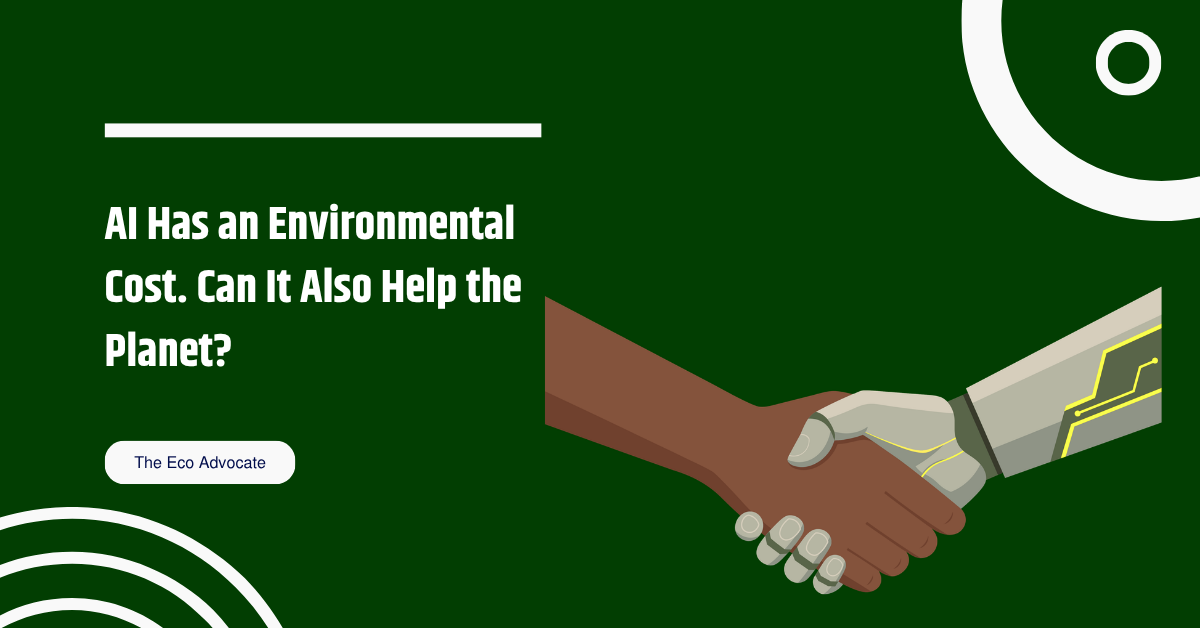
How many times this year have you read that artificial intelligence is bad for the environment? Data centres guzzling electricity. Cooling systems drinking water. Carbon emissions rising with every new model.
Those concerns are real, and I’m not going to pretend otherwise. Back in 2019, I wrote that even our internet use has a carbon footprint. AI makes that footprint bigger.
But here’s a question we don’t ask often enough: what is the positive side? If we’re going to carry the cost, shouldn’t we at least know what we’re getting for it?
A new example from the UN
On 1 October 2026, the UN Department of Economic and Social Affairs launched a free tool called the SDG Chat. It’s an AI assistant that answers questions about the Sustainable Development Goals, drawing on more than 800 UN publications and DESA’s own websites.
Why does that matter? Because finding reliable information on climate, poverty, water or biodiversity usually means digging through long reports and scattered websites. The SDG Chat pulls it into one place. It answers in all six official UN languages, and it points users back to the original reports instead of replacing them. The UN says the tool was built with human oversight and relies only on authoritative sources.
For a student in Kitui, a county officer drafting a climate plan, or a small community group writing a grant proposal, that kind of access can save days of work.
Where else is AI helping the planet?
The SDG Chat is one example. Here are a few more ways AI is already being used for conservation and climate action:
- Watching forests from space. AI can scan satellite images and flag new clearing far faster than people could, so rangers and authorities can act sooner.
- Counting wildlife. Camera traps take thousands of photos. AI can sort them by species in a fraction of the time it would take a person.
- Listening for danger. Acoustic sensors paired with AI can pick out sounds like gunshots or chainsaws in protected forests.
- Early warnings. AI helps improve forecasts for floods and droughts, giving families and counties more time to prepare.
- Smarter farming. Tools that combine weather and soil data can help farmers decide when to plant and how much to water.
So, is AI good or bad for the environment?
Honestly? It depends on how we use it, and who it serves.
AI that helps a ranger stop a poacher, or helps a farmer survive a dry season, is doing real good. AI used to churn out endless content nobody needs is mostly adding to the bill. The technology itself isn’t the hero or the villain. Our choices are.
Here’s what I’d like to see:
- Clean energy for data centres, and honest reporting of their energy and water use.
- Tools built for the Global South, in our languages, working on low-bandwidth phones.
- Human judgement kept in the loop, especially where AI informs decisions about land, wildlife or people.
- Fair access, so the benefits don’t stay with the countries and companies that build the tools.
Over to you
We can’t afford to be naive about AI’s footprint. But we also can’t afford to ignore tools that might help us protect what’s left. The key is to keep asking: is this worth its cost?
Have you used AI for environmental work, or seen it used well? Or do you think the cost outweighs the benefits? Tell me in the comments.
Source: IISD SDG Knowledge Hub, October 2026


Discover more from The Eco Advocate
Subscribe to get the latest posts sent to your email.


