
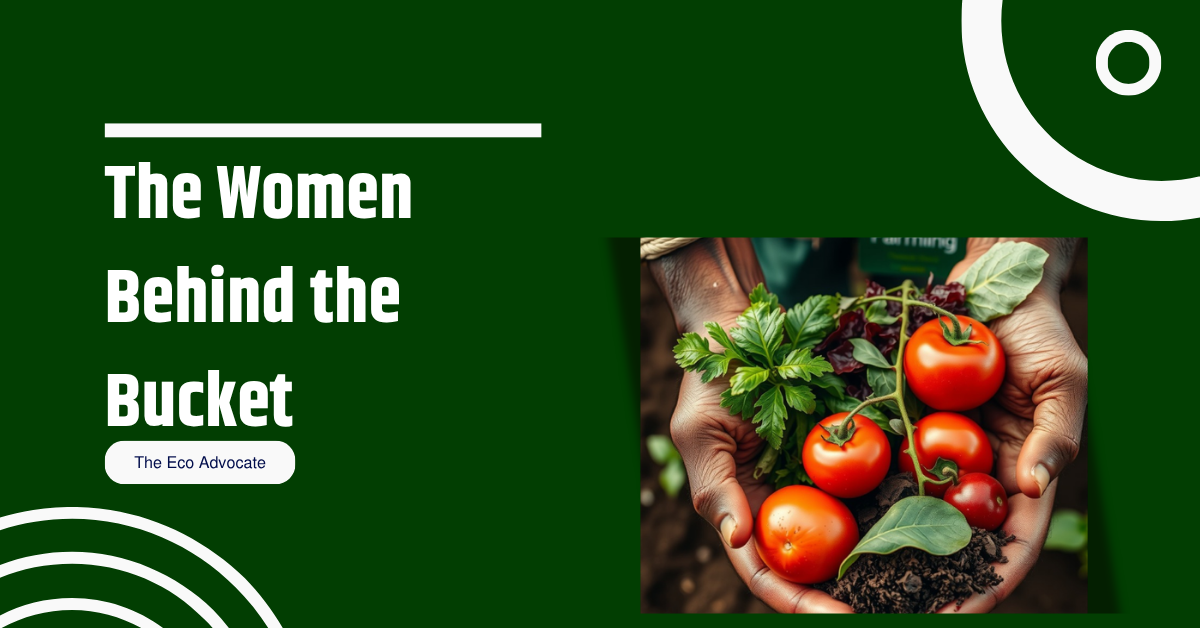
Who actually grows the food on a child’s plate?
Not the logo on the project banner. Not the funder’s name in the report. The actual hands. In most of the kitchen garden projects I have seen, the honest answer is a woman. Often unpaid. Often teaching someone younger how to do it too, while she does it.
Today is the International Day of Rural Women. The UN General Assembly set it aside in 2007 to recognise the role rural women play in agriculture, food security and fighting rural poverty. It lands right in the middle of World Food Day week, and that timing matters.
Because this week, we are all talking about innovation. The theme for World Food Day is “Innovate today. Nourish tomorrow.” I love that theme. But the “innovation” framing can skip over something important: the labour and the teaching behind every drip-bucket garden. A bucket doesn’t fill itself. A seed doesn’t save itself. And a habit doesn’t pass from one child to the next without someone patient enough to show them how.
What does the journey from bucket to plate actually look like?
On paper, a drip-bucket garden is simple. In real life, every step has a person behind it.
- A bucket and a drip line. The bucket is raised so gravity pushes water slowly through the line to the roots. Someone has to fill it every day, often carrying the water from a distance.
- A raised bed and mulch. The bed is dug, the soil is prepared, and dry grass or leaves are laid on top to keep moisture in. Someone has to know how deep, how wide, and how much.
- Seeds suited to the area. Someone chooses which seeds will survive the heat, and very often that someone saved them from last season’s harvest.
- Children watering, weeding and harvesting. This is the part that ends up in the photos. But someone taught the children how to do it gently, and someone checks on the bed when the children go home for the holidays.
- Fresh greens on the plate, often the same day. Someone cooks them and makes sure there is enough for every child.
You can see the pattern. The bucket is the technology. The person is the system. You can read more about how our gardens are set up on the Kitchen Gardens for Kids page.
Where do rural women fit into this chain?
At nearly every step.
In many communities, women do much of the growing, much of the seed-saving, and much of the teaching that turns a one-off garden into a habit passed down. The cook at the children’s centre who knows which greens survive the dry season. The teacher who adds garden duty to the class rota and keeps it going after the launch. The grandmother who shows a seven-year-old how to pinch off a managu leaf without killing the plant.
That work rarely appears in a funding report. Reports count buckets installed and children reached. They don’t count the hours. But those hours are the reason these gardens survive past their first season. I wrote recently about how a tree isn’t finished when it’s planted. A garden isn’t finished when it’s installed, either. Someone has to keep showing up, and very often that someone is a woman.
What would real recognition look like?
A thank-you post is nice. It isn’t enough. Here is what I think real recognition looks like:
- Name the women running these gardens, with their permission. Not only the “project”, the funder or the institution. Let people know who is actually doing the work.
- Pay garden coordinators. Don’t assume volunteer labour, especially from women who already carry the heaviest load at home. I have argued before that conservation can’t run on love alone, and the same is true for community food work. Fair pay is part of what makes it last.
- Send training and small grants directly to the women doing the work. Not only to institutions. When the money and the skills sit with the person who keeps the garden alive, the garden is more likely to stay alive.
- Give them a voice in the design. The women who run the garden every day know which seeds work, where the water comes from, and what time of day the children are free. Ask them first, not last.
You are the innovation
To every rural woman who has ever taught a child to plant, water or harvest: Thank you. You are the innovation this week is supposedly celebrating. And it’s time the reports, the budgets and the photos caught up with that.


Discover more from The Eco Advocate
Subscribe to get the latest posts sent to your email.


