
Do we treat drought as an emergency, or as something we could have seen coming?
When was the last time you heard the word “disaster” used for a dry season? We use it for floods. We use it for landslides and fires. But drought? Drought usually gets called “hard times” until the day someone finally declares an emergency.u
Today is the International Day for Disaster Risk Reduction. The UN’s theme this year is “Resilience Starts at Home”, and it focuses on the household as the place where risk is felt first and where preparedness has to begin. I can’t think of a better lens for Kenya’s quietest, most predictable disaster.
Why call drought a disaster at all?
Because it behaves like one. It destroys harvests. It empties water points. It pushes food prices up and forces families to sell livestock at the worst possible moment. All of that happens long before anyone signs an emergency declaration.
But here is the difference. A flood or an earthquake can arrive in minutes. Drought gives warning. The short rains fail, then the long rains come late, pasture thins, and boreholes drop. Month after month, the signs pile up.
So the real question isn’t whether drought is coming. It is whether we use the warning. UNDRR puts it plainly in its concept note this year: a warning that never reaches the household, or isn’t acted on, has failed. And I’ve written before about what drought does to wildlife and other species. The same slow damage plays out in our homes, our shambas and on our children’s plates.
What can households and small growers actually do, cheaply?
This is where “resilience starts at home” stops being a slogan. You don’t need a borehole or a greenhouse to grow food through a dry spell. Here is what I have seen work, again and again:
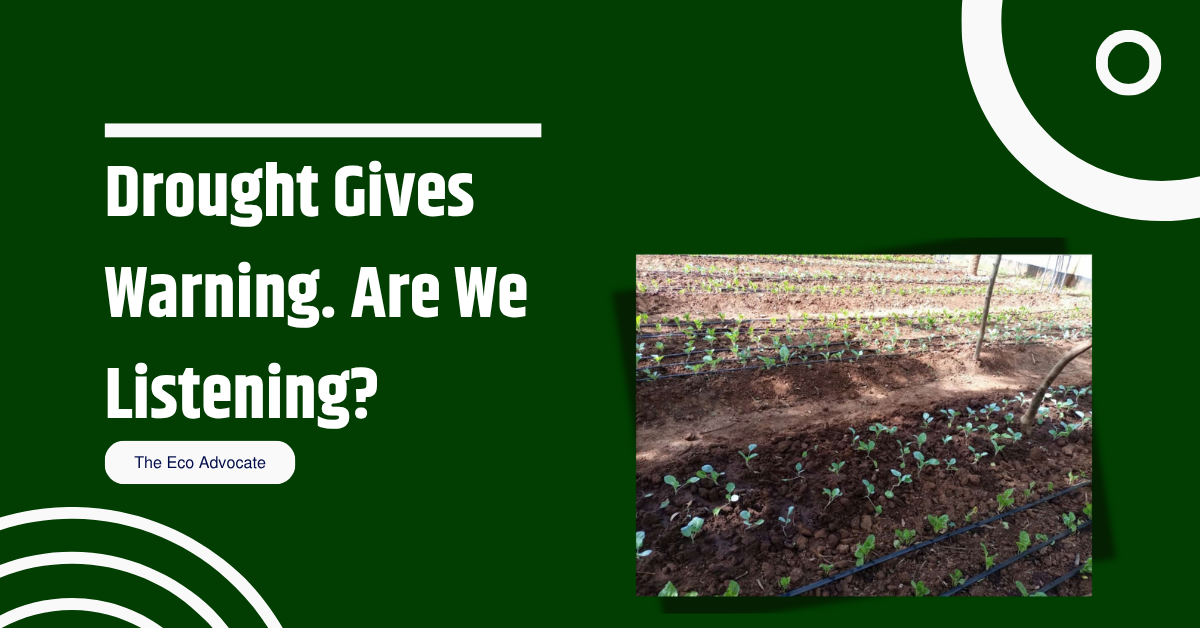
- Drip-bucket irrigation. A raised bucket feeds water slowly through a drip line to the roots. Far less is lost to evaporation and runoff than with a watering can. This is the system behind our Kitchen Gardens for Kids project.
- Mulch. A layer of dry grass, leaves or crop leftovers keeps the soil cool and moist for longer between waterings. It also slowly feeds the soil as it breaks down.
- Sack or vertical gardens. A sack of soil with planting holes down the sides can grow a surprising amount of greens in a very small space. Small spaces are easy to water well.
- Water early morning or evening. Watering in the midday sun means much of it evaporates before the roots get it. Cooler hours give every litre a better chance.
- Grow tough local greens. Managu (African nightshade) and terere (amaranth) handle dry spells better than many imported varieties. They are also packed with nutrients, and our grandmothers already knew how to cook them.
None of this needs expensive equipment. It needs a little planning, a few buckets, and someone who cares enough to start before the dry season arrives, not during it.
And if you want to stretch the water further indoors too, my old use water wisely challenge has some simple habits. Grey water from rinsing vegetables, for example, can go straight onto the garden.
Who should be doing more?
Households can only carry so much. So let’s talk about the people with budgets.
County disaster offices should treat drought preparedness with the same urgency as flood response. Kenya already has early warning information. The National Drought Management Authority tracks conditions county by county. The gap is what happens next. Too often, the money arrives as emergency relief after the dry season bites, not as low-cost resilience measures before it does.
What would that shift look like in practice?
- Fund household resilience early. Buckets, drip kits, seed for drought-tolerant local greens, and training on mulching and water harvesting, rolled out when the early warnings turn amber, not red.
- Use schools and children’s centres as hubs. A garden at a school reaches hundreds of families through the children who go home and talk about it.
- Plan beyond one season. Look at Izera Ranch in Taita Taveta. It began 16 years ago as a refuge for livestock fleeing drought in Kajiado, and grew into a 20,000-acre restoration project with solar-powered water for livestock and wildlife. That is what planning for drought, instead of reacting to it, can build.
Preparing costs a fraction of recovering. UNDRR makes that point about homes, and it is just as true for gardens, herds and water points. Kenya’s own climate change action plans say much the same. What we need now is the budget to match the words.
You are already doing disaster risk reduction
To every household already growing food through a dry season with nothing but a bucket and persistence: you’re already doing disaster risk reduction, whether or not anyone calls it that. Thank you. The rest of us, county offices included, need to catch up with you.


Discover more from The Eco Advocate
Subscribe to get the latest posts sent to your email.


